


Ayutthaya – Where stone walls whisper stories
Sometimes you stand in a place and immediately sense that history here is not simply a thing of the past, but still alive. Ayutthaya is such a place. Located around 80 kilometres north of Bangkok, this former capital of ancient Siam has lost none of its dignity to this day. Among the old brick ruins, the crumbling temples and the silent faces of Buddha, you can sense a time when power, faith and trade made the kingdom thrive.
I remember strolling through the old walls as the sun hung low and bathed the temples in warm gold. The wind smelled of dust, earth and adventure – a bit like Indiana Jones was about to turn the corner. Scattered everywhere: temple complexes that have defied gravity for centuries. Wat Yai Chai Mongkon, with its mighty chedi and endless rows of meditating Buddha figures, particularly captivated me – dignified, peaceful, without any pomp.
And then there was this monk, barefoot, smiling, calm. No words, no mobile phone, no selfies. Just the present moment. I pause – and for the first time in days, I feel like I have truly arrived.
Ayutthaya is not a place you ‘visit’. You experience it. In the heat, in the dust, in your own sweat and amazement. If you let yourself drift here, you feel that history sometimes whispers louder than any travel guide. And maybe – just maybe – you notice that you yourself become a little quieter.
Ayutthaya – Between the past and rice fields
Some places don’t wear their history loudly. They whisper. Ayutthaya is one of them. Quiet, dignified — almost as if the city has long since understood that time is a human invention. Once the radiant capital of a powerful kingdom, later destroyed by the Burmese, today it remains a vast memory made of bricks, roots, and recollections. Power fades. Beauty stays. And sometimes, even humility survives.
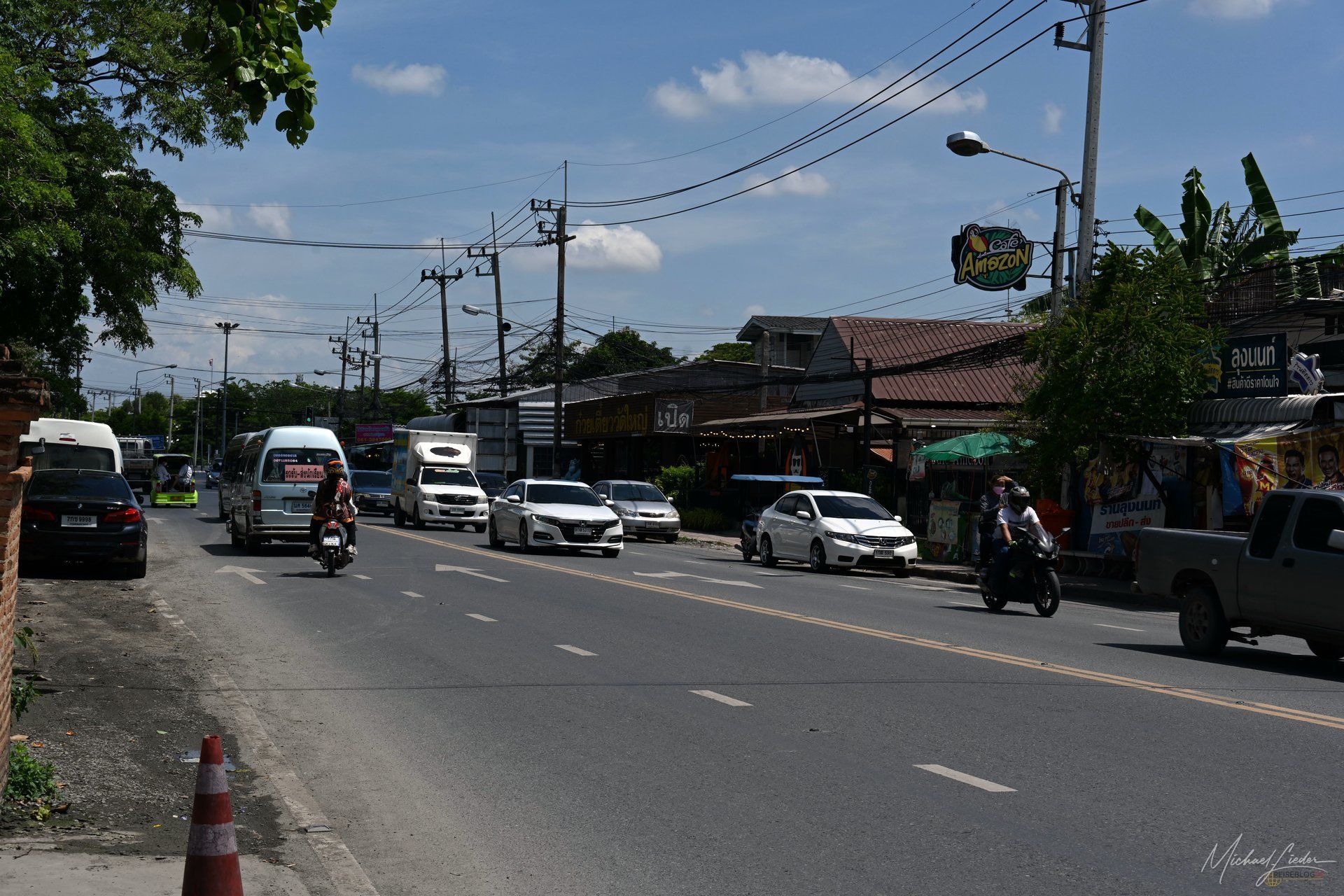
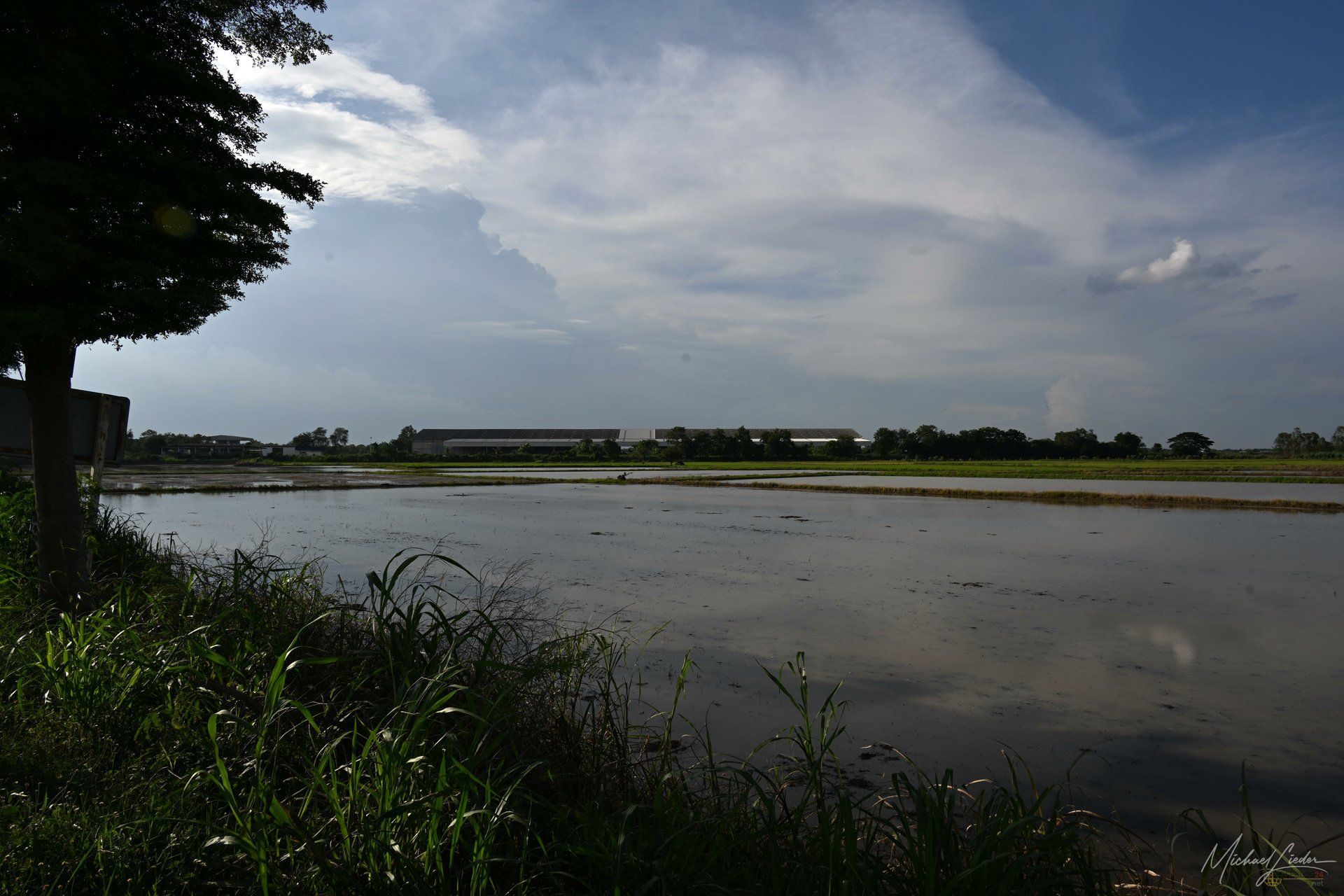
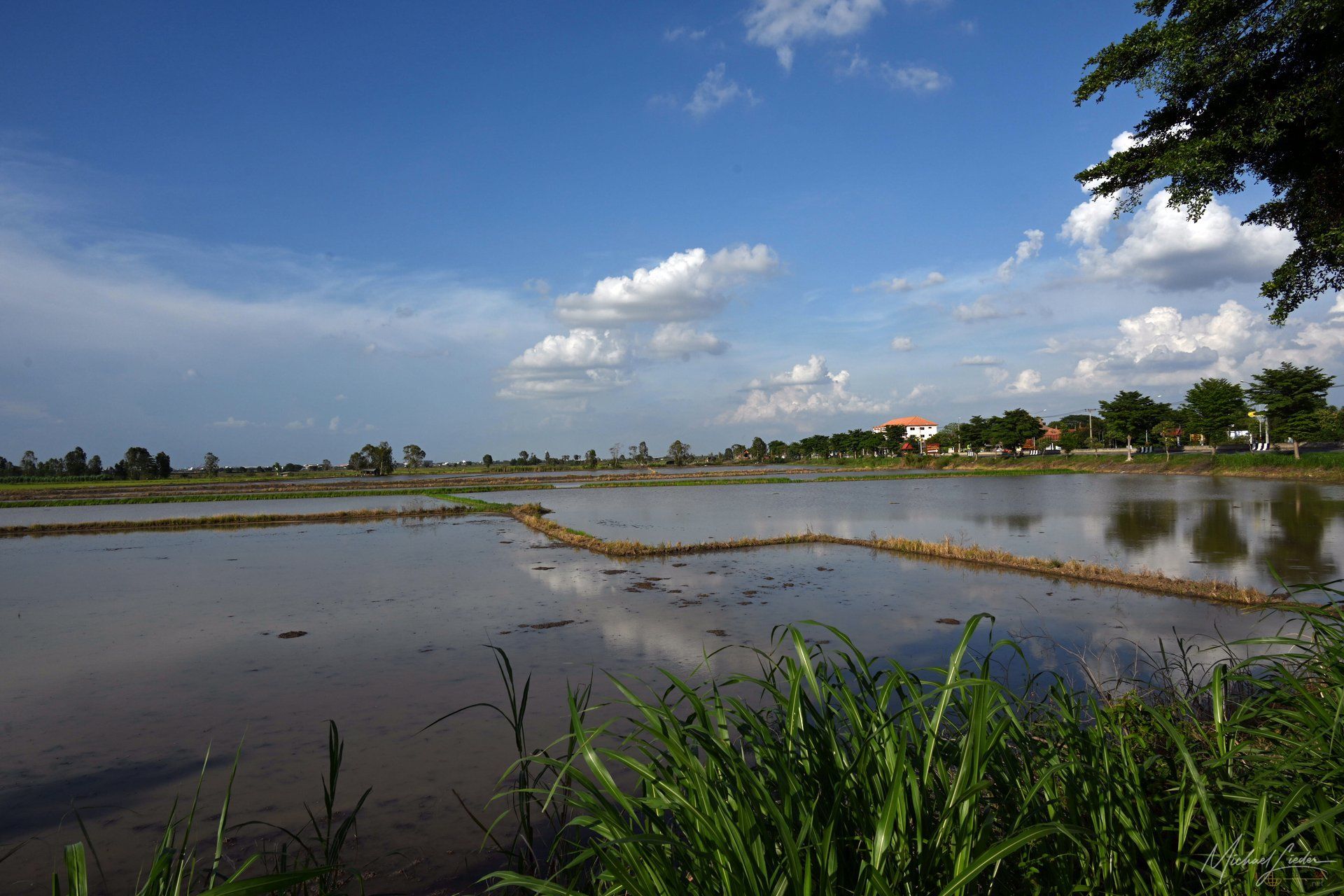
Most people come here to tick a box: a few hours, a mandatory Buddha selfie, mango smoothie in hand, then straight back to Bangkok — as if history were something you could squeeze in between two appointments. I wanted it differently. Three days. Time. Space. And the freedom to drift between temples and tuk-tuks until Ayutthaya stopped feeling like an agenda item and started feeling like a place. Even the journey north — barely 80 kilometers, yet somehow a small world trip — had its own rhythm. The rental car hummed along the asphalt, rice fields shimmered in the light, motorcycles zipped past carrying half a household and a whole lot of stories. Thailand, in a nutshell: practical, alive, a little chaotic — and precisely for that reason, deeply human.
In Ayutthaya itself, worlds collide without disturbing one another. Crumbling walls speak of kings, wars, and grand ambitions, while right next door street kitchens hiss and teenagers on scooters provide the soundtrack of the present. Between ruins and jasmine rice lies a Thailand that’s quieter, more honest — and closer to the heart. No spectacle. No posing. Just being. I wandered through the temple grounds without a goal, without a watch. And yes — that may well have been the smartest travel decision of the entire trip.
Because sometimes, the greatness of a place isn’t measured by its walls, but by the feeling it leaves behind when you go. Ayutthaya does that in its very own way: calm, reflective — and with a gentle smile that seems to say, You were here. And that’s enough.
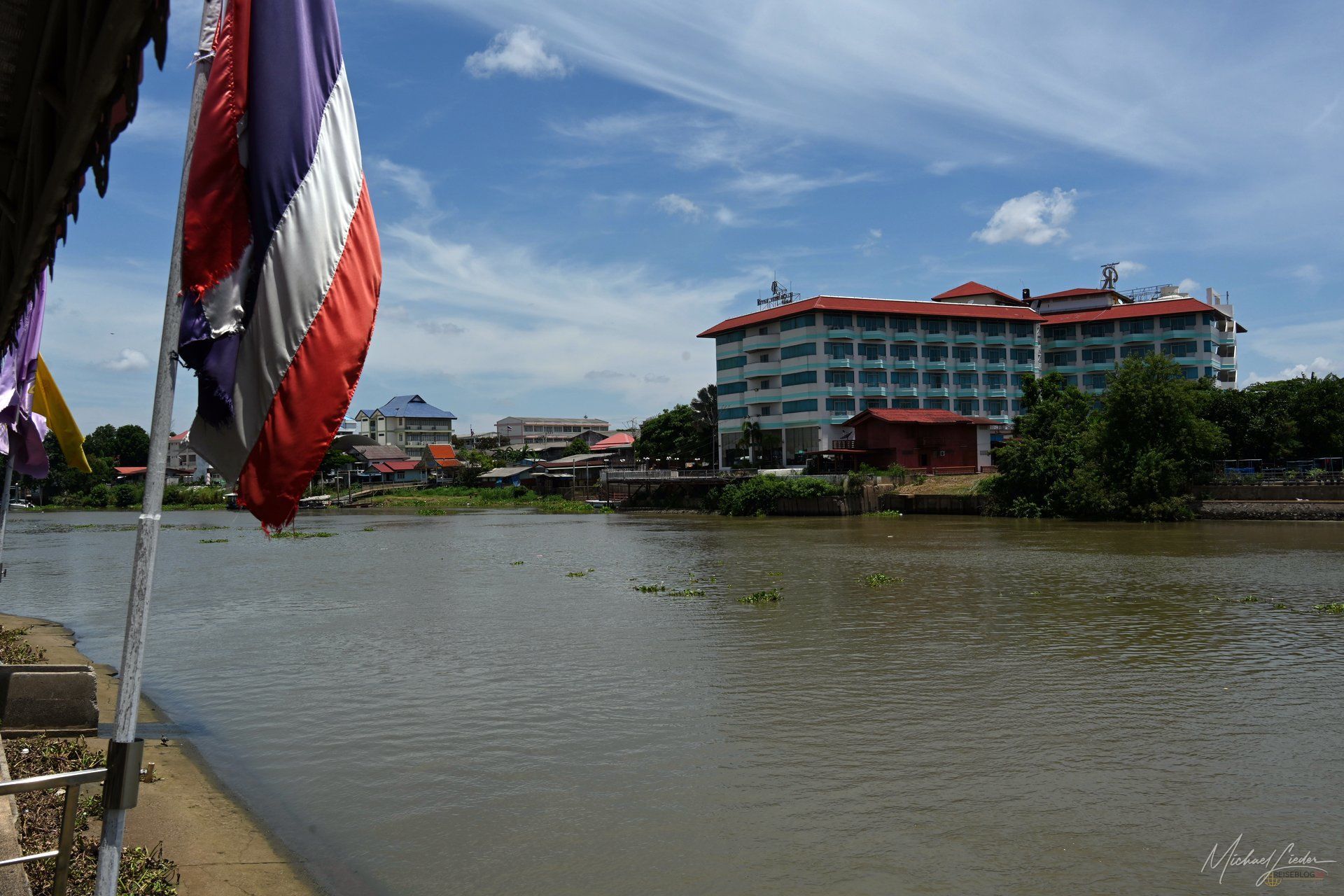
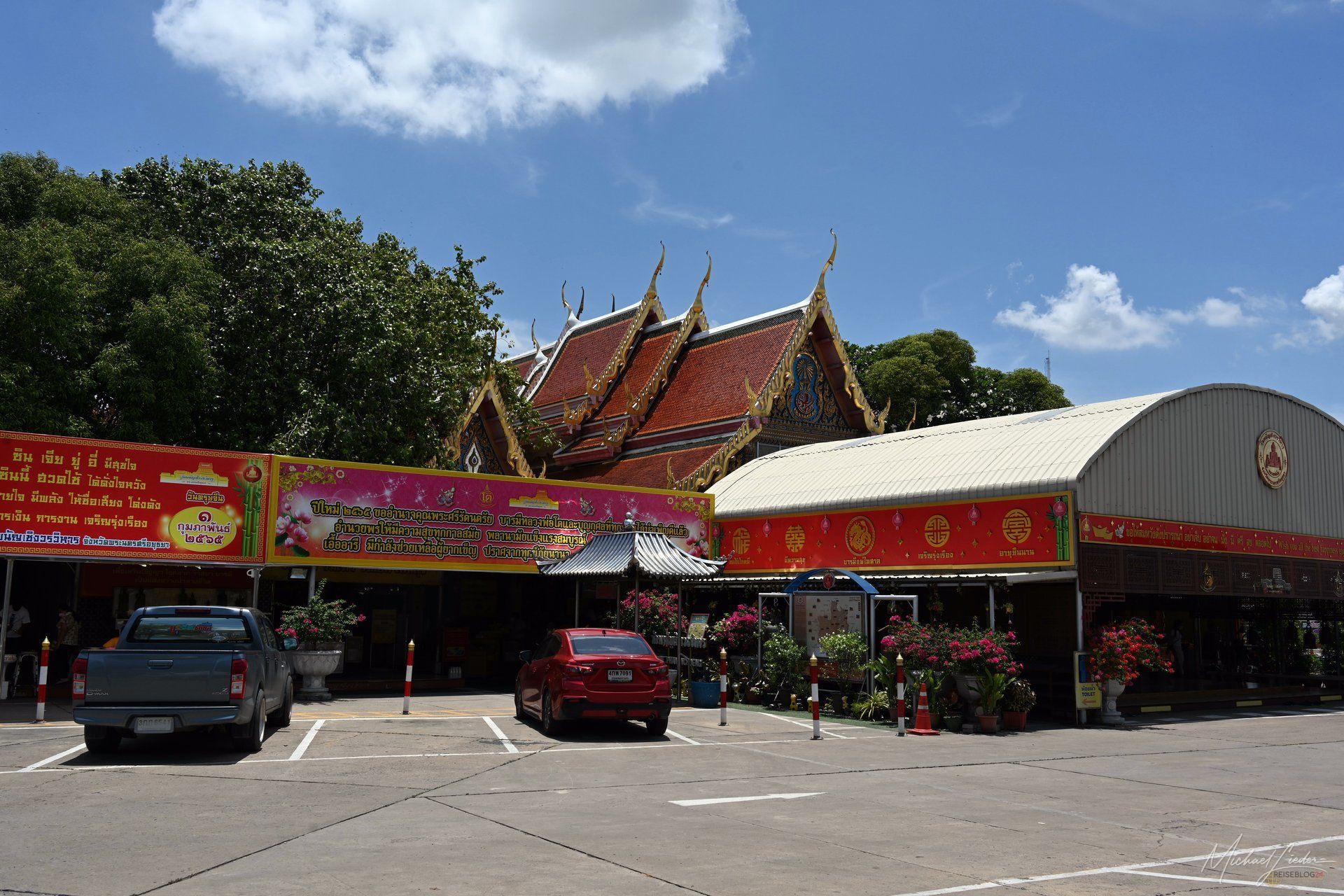
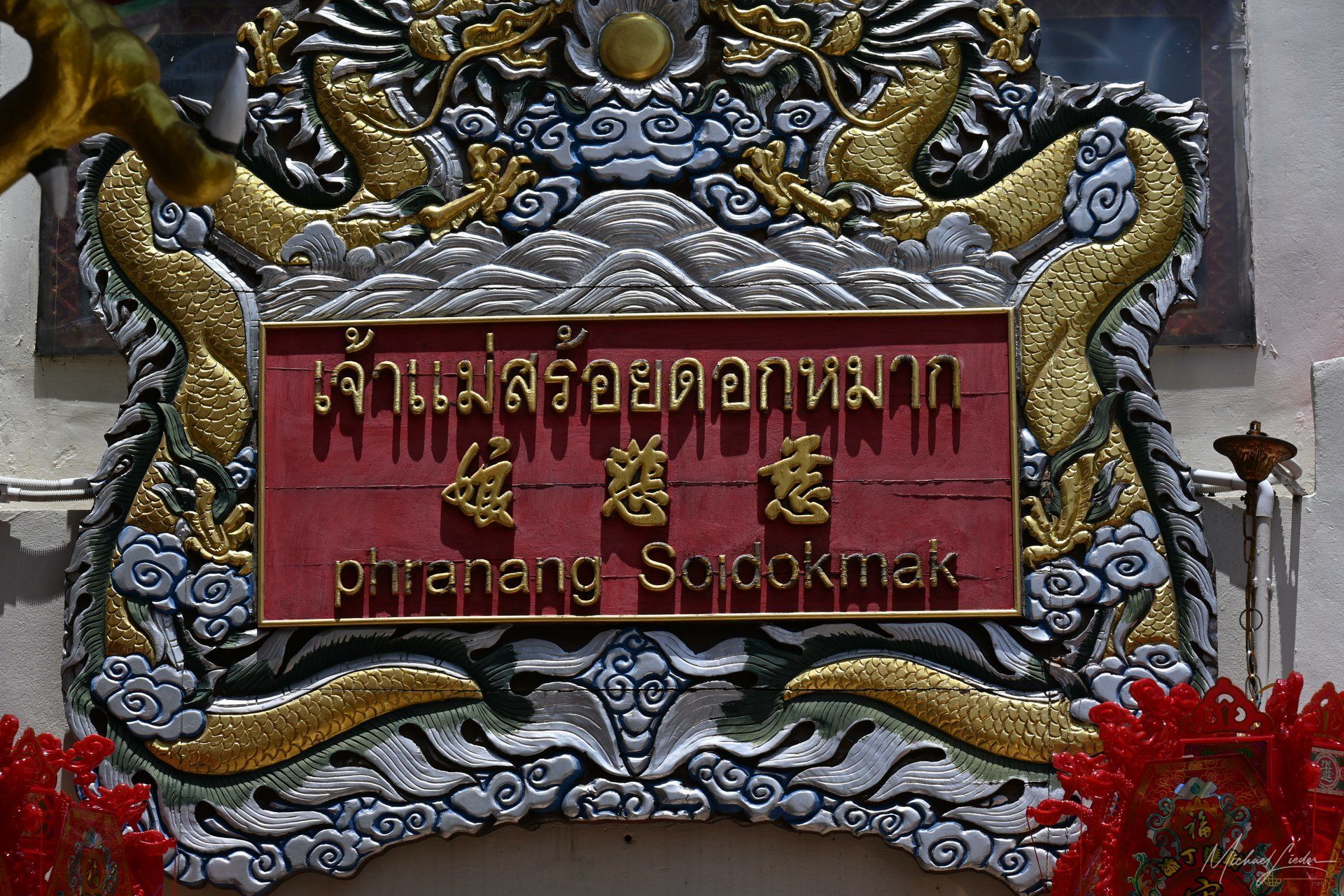
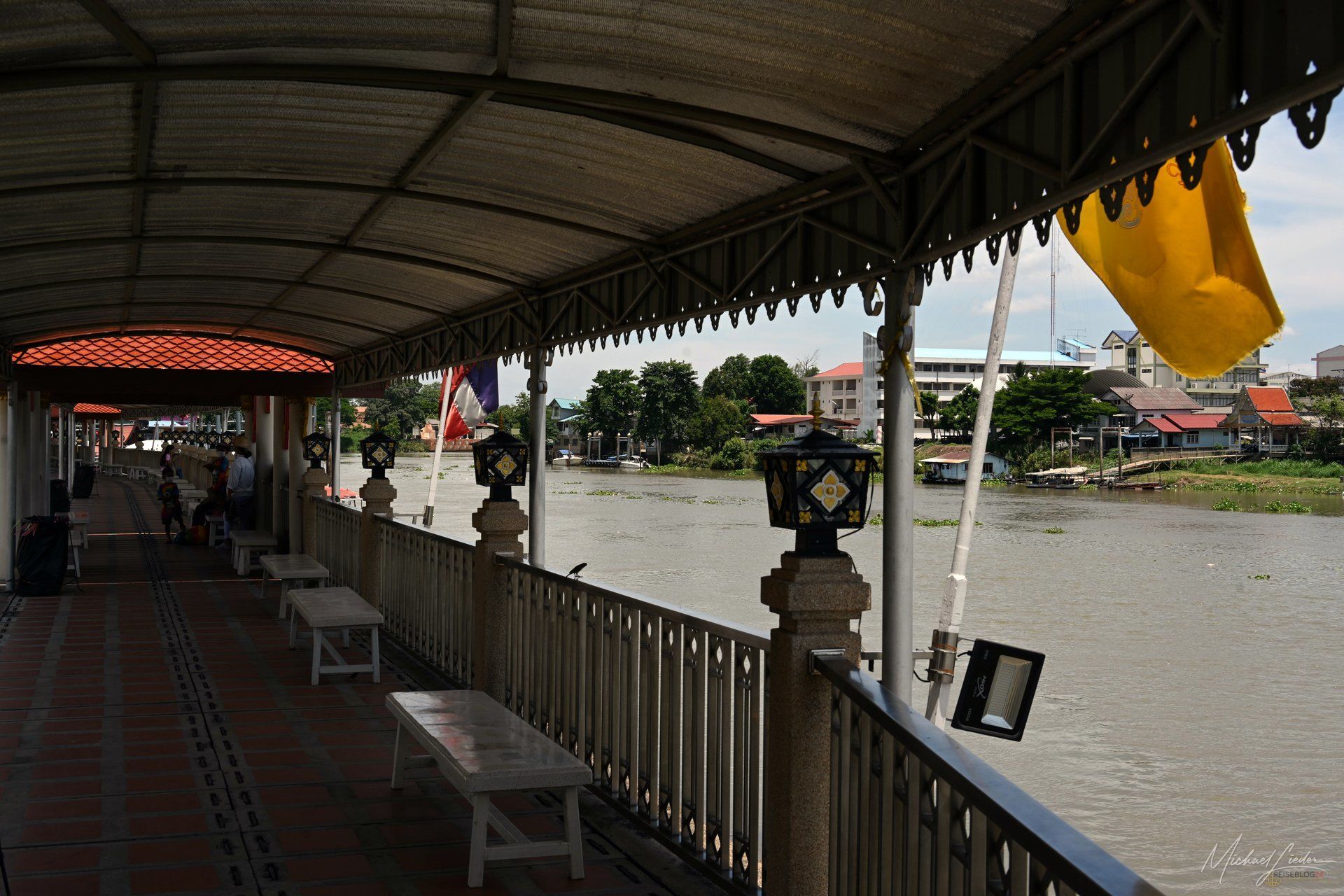

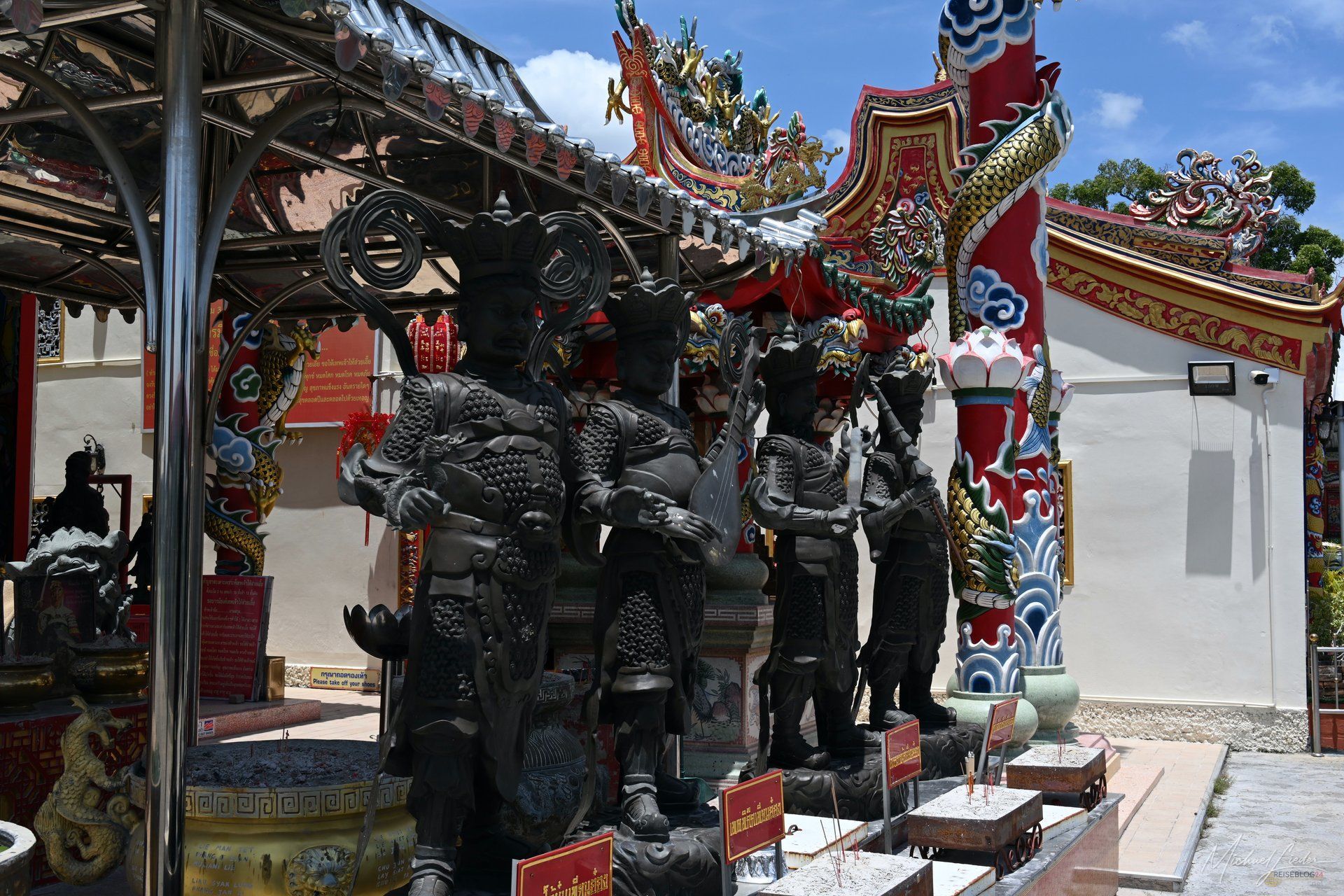

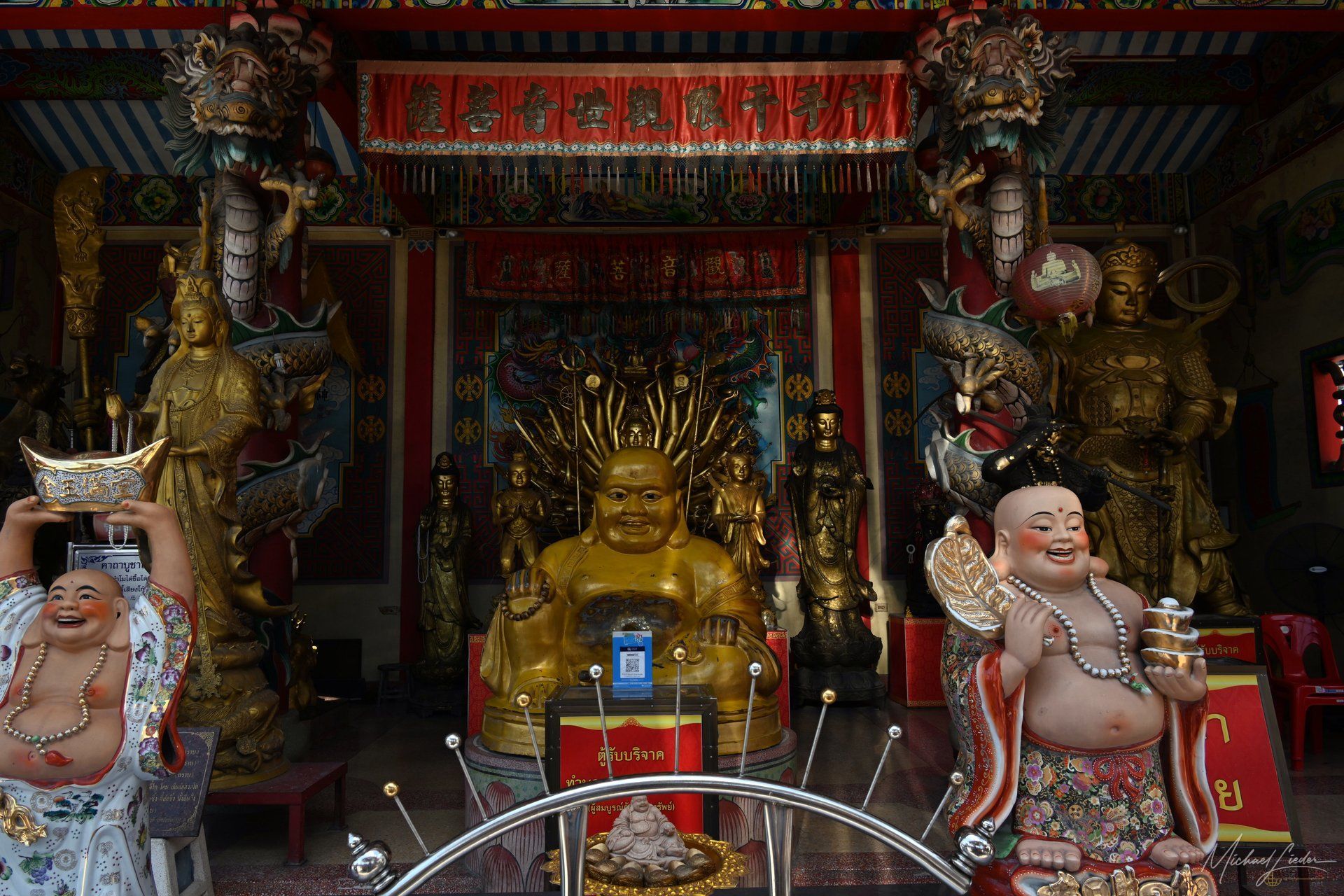
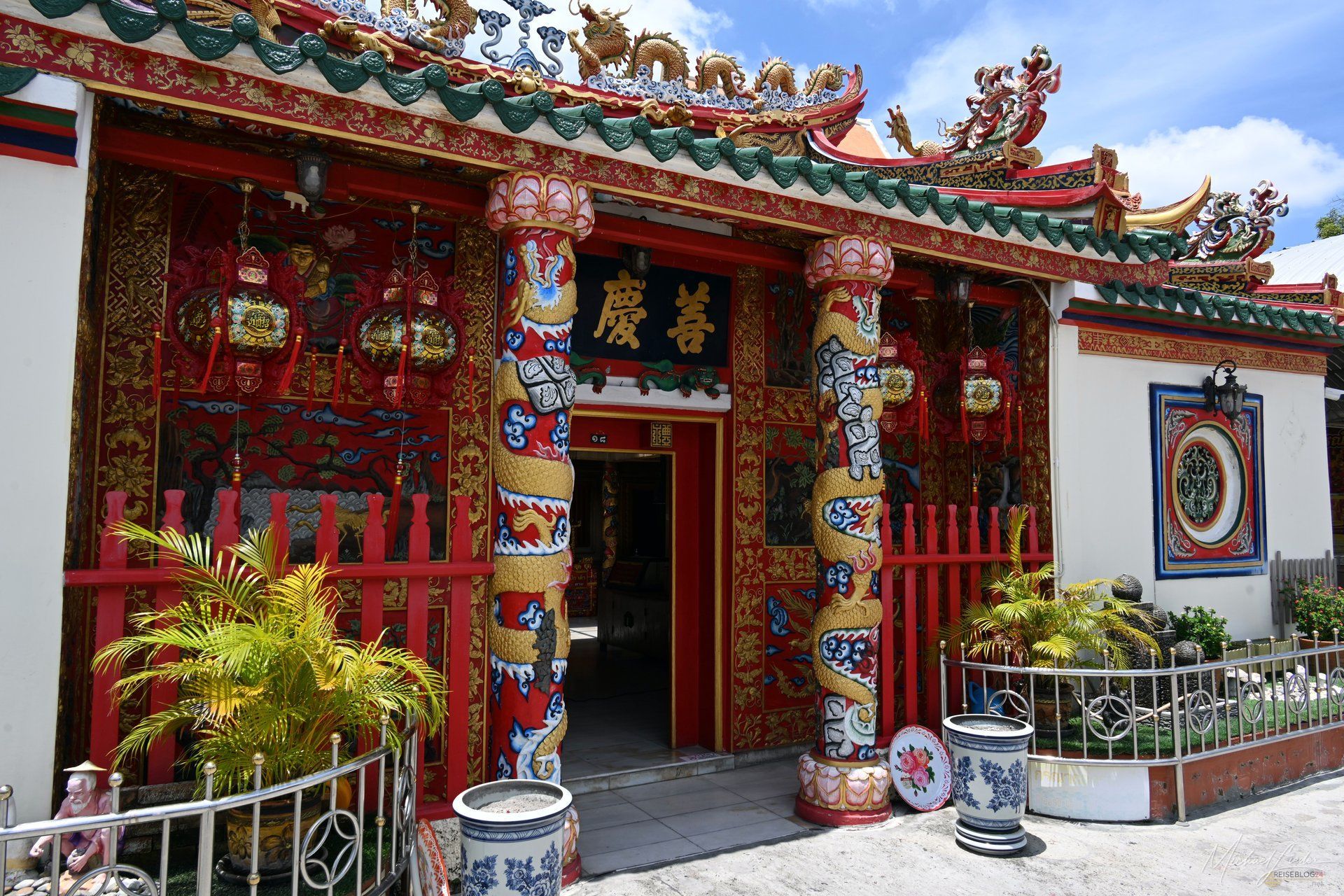
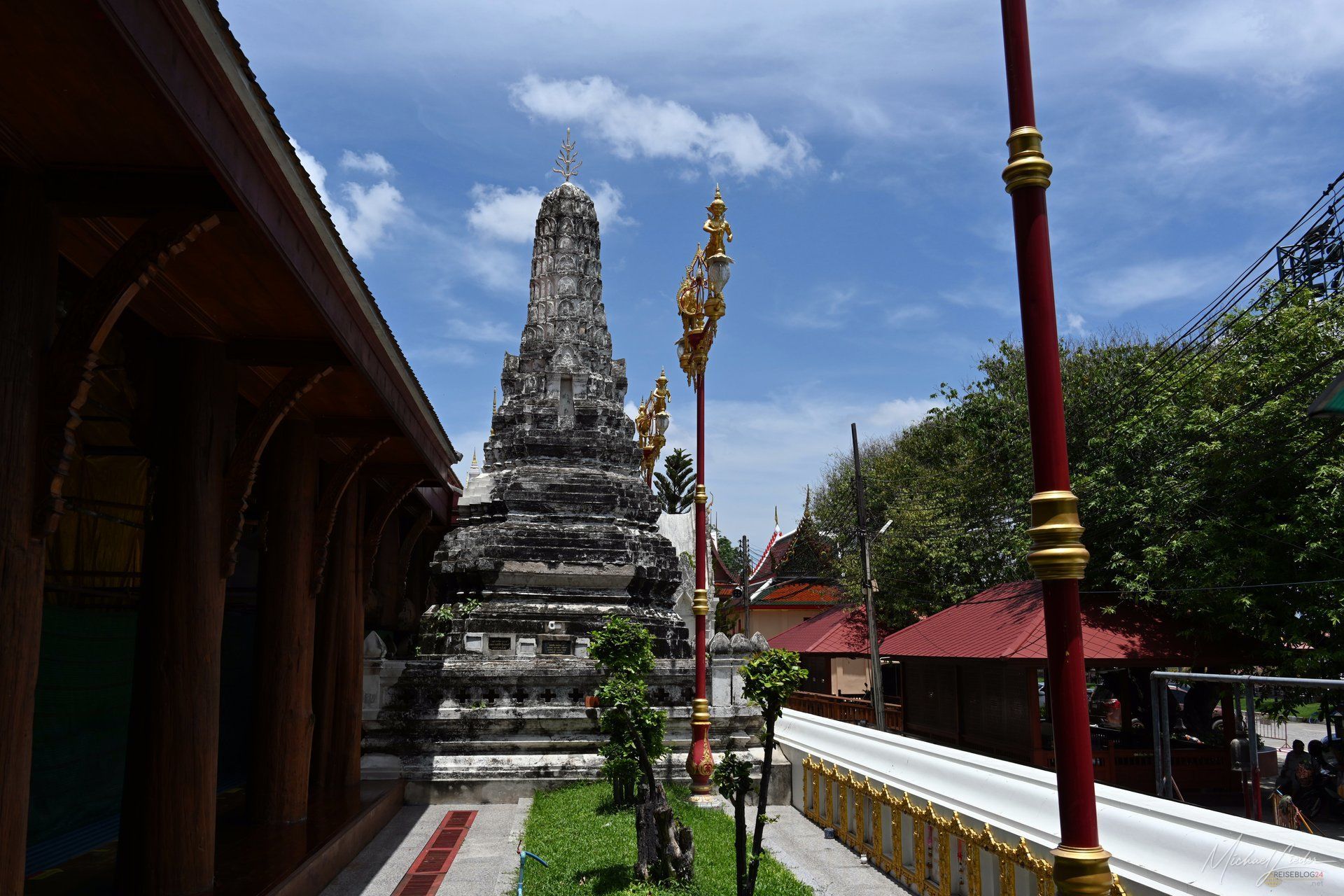
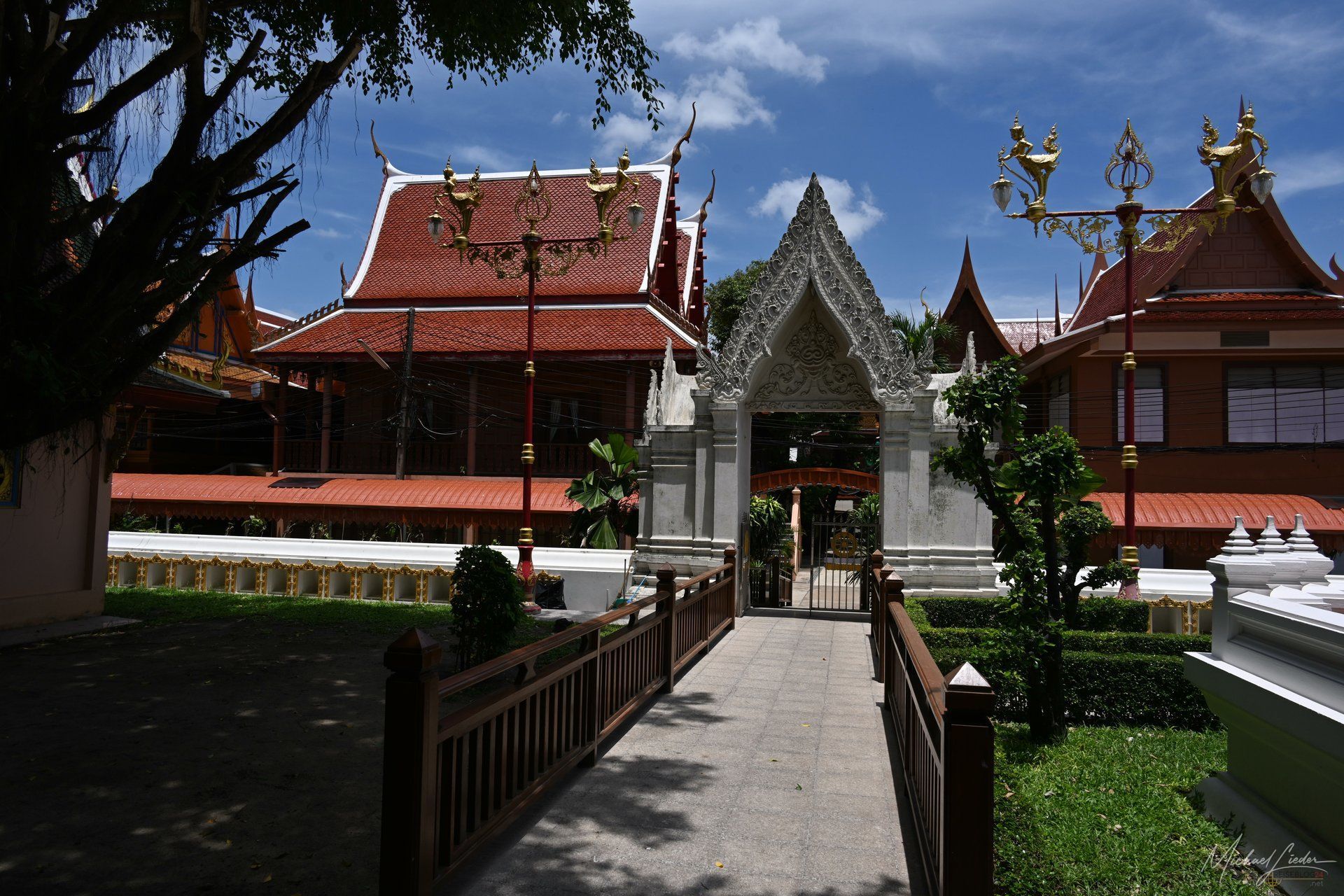
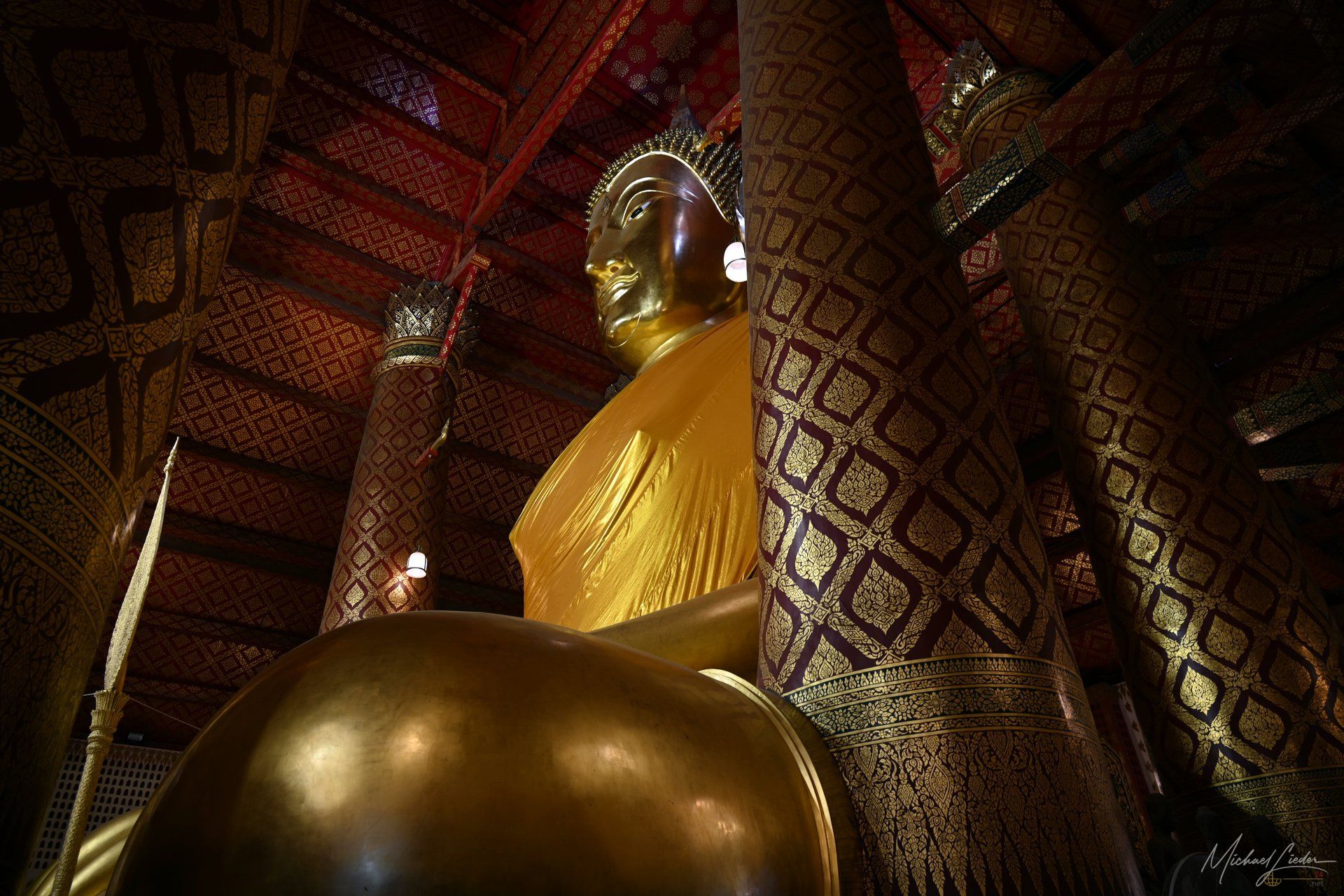
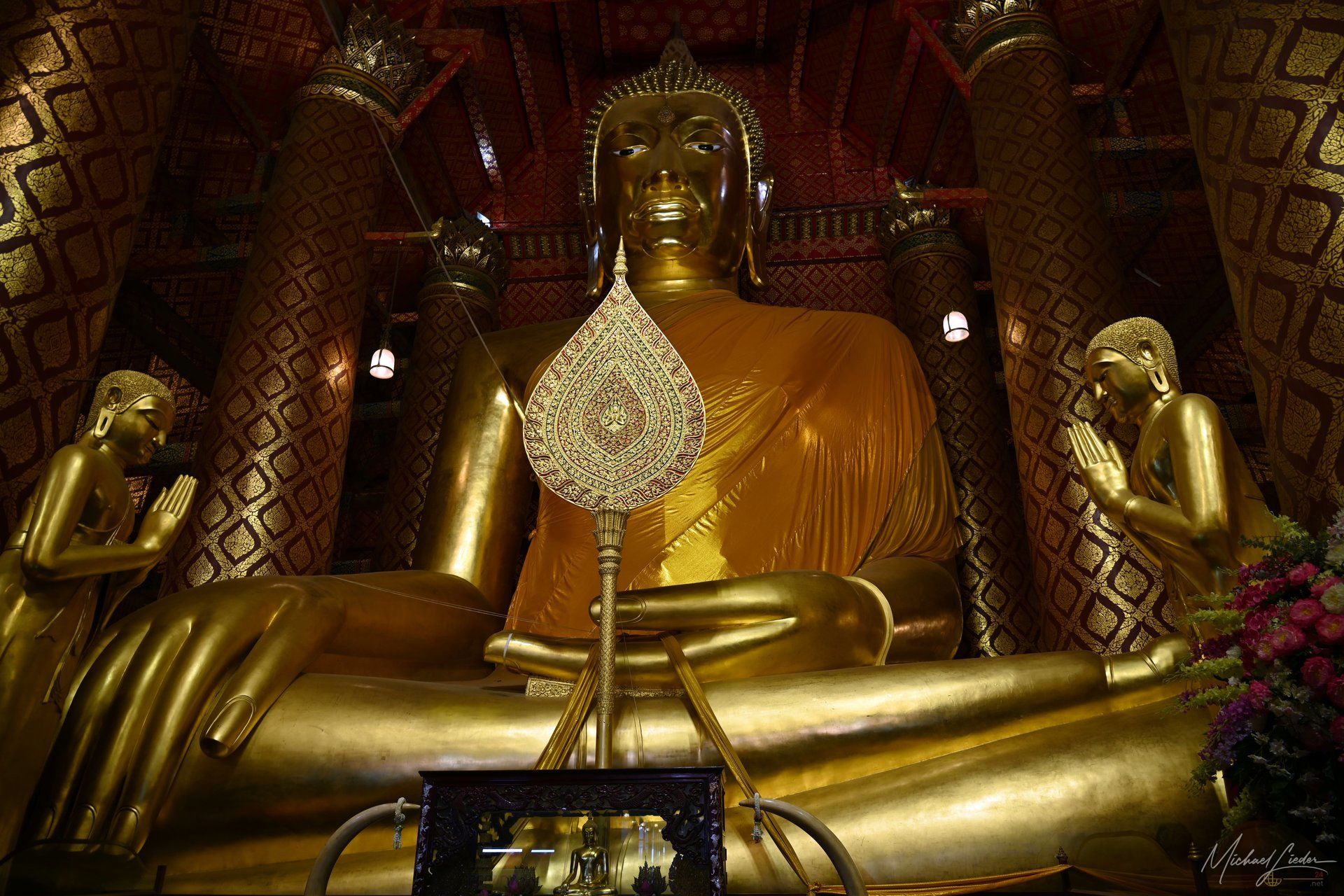
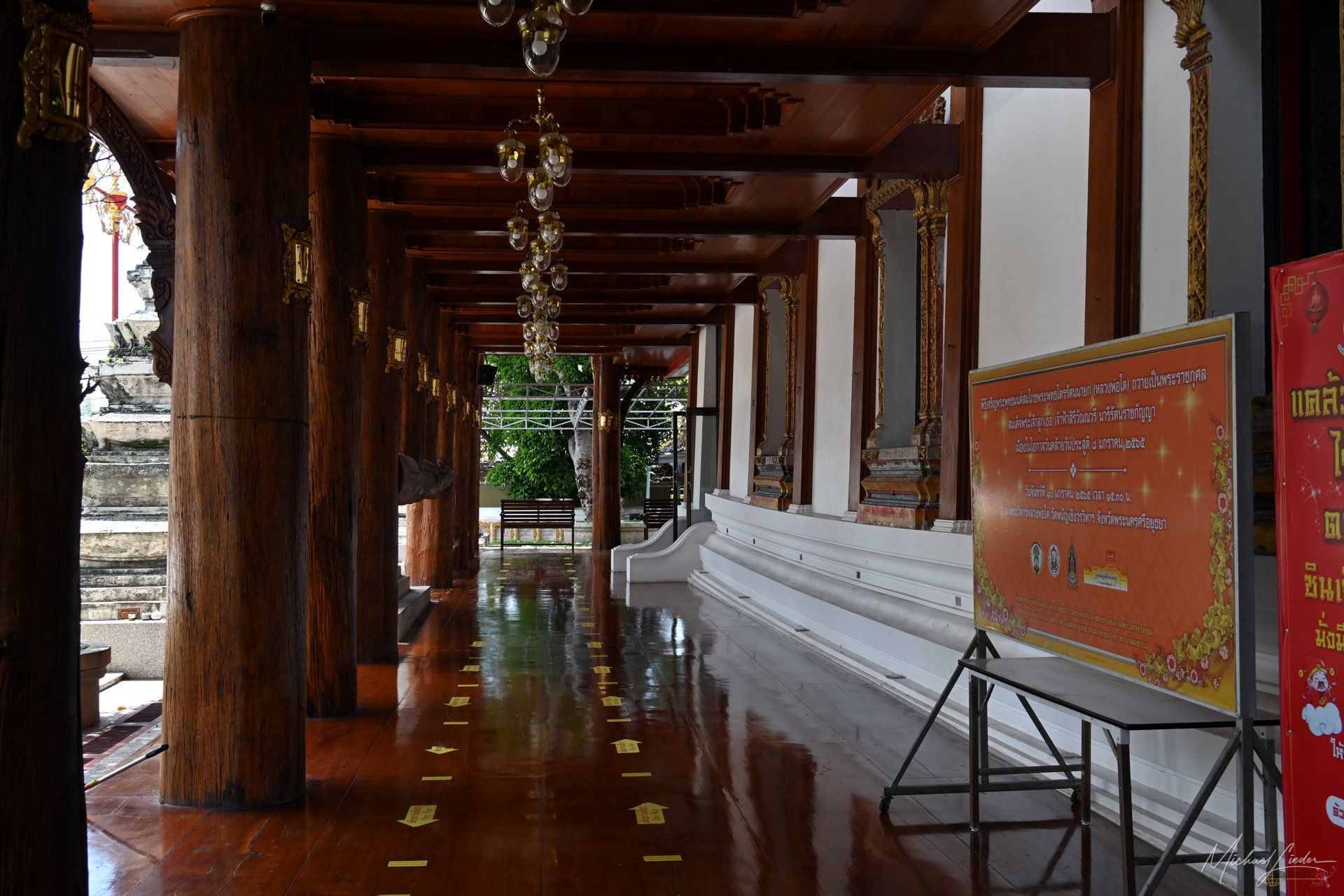

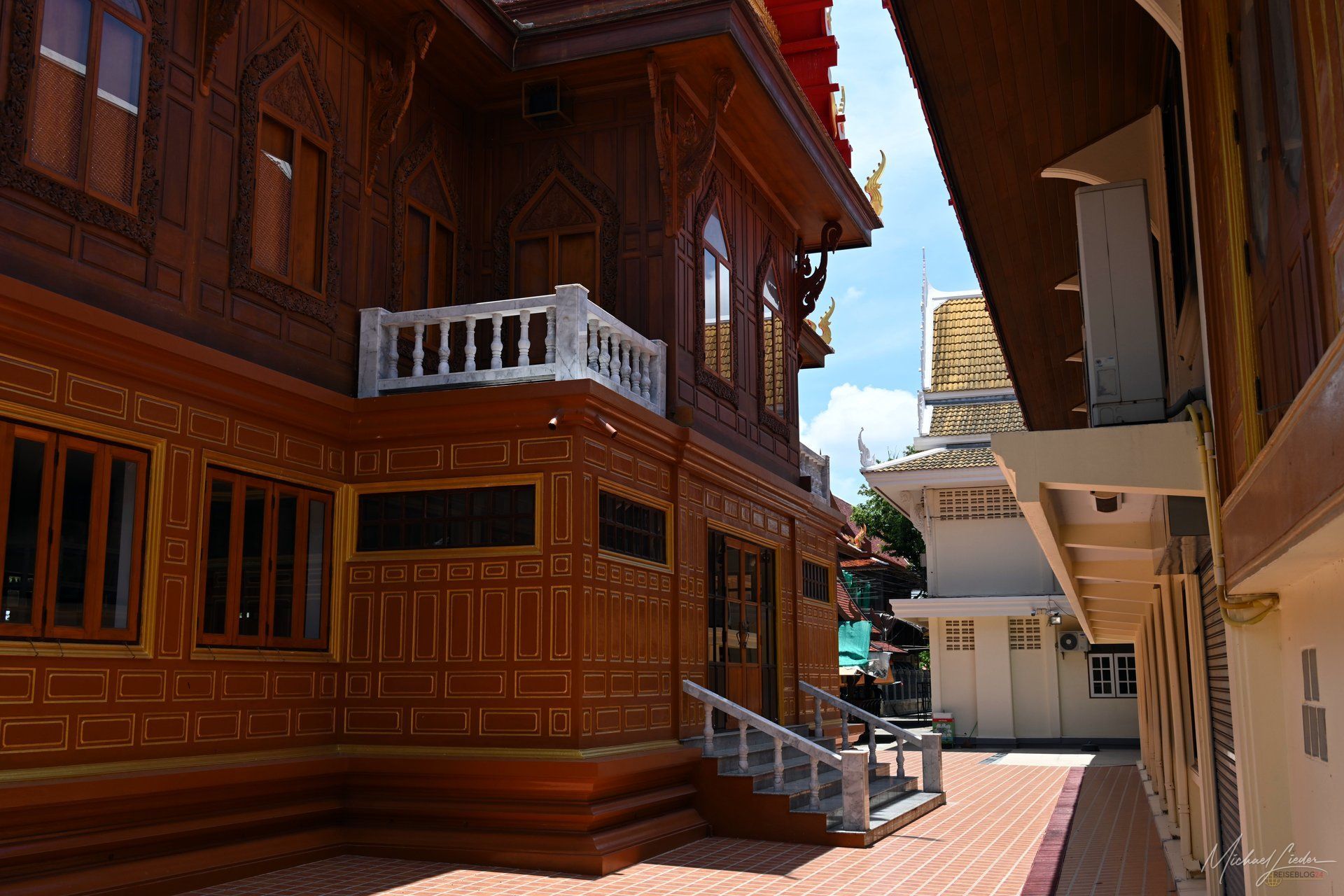
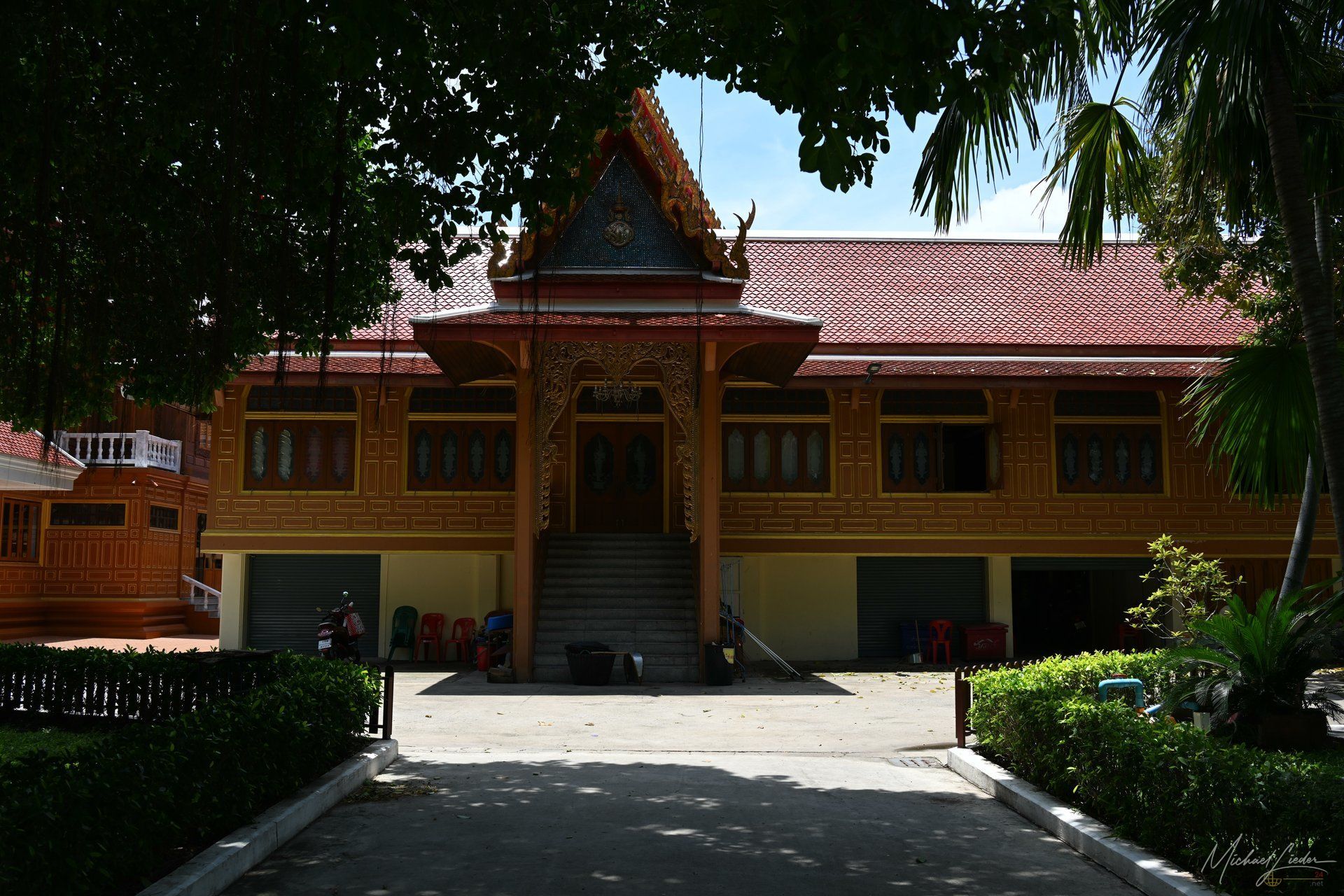
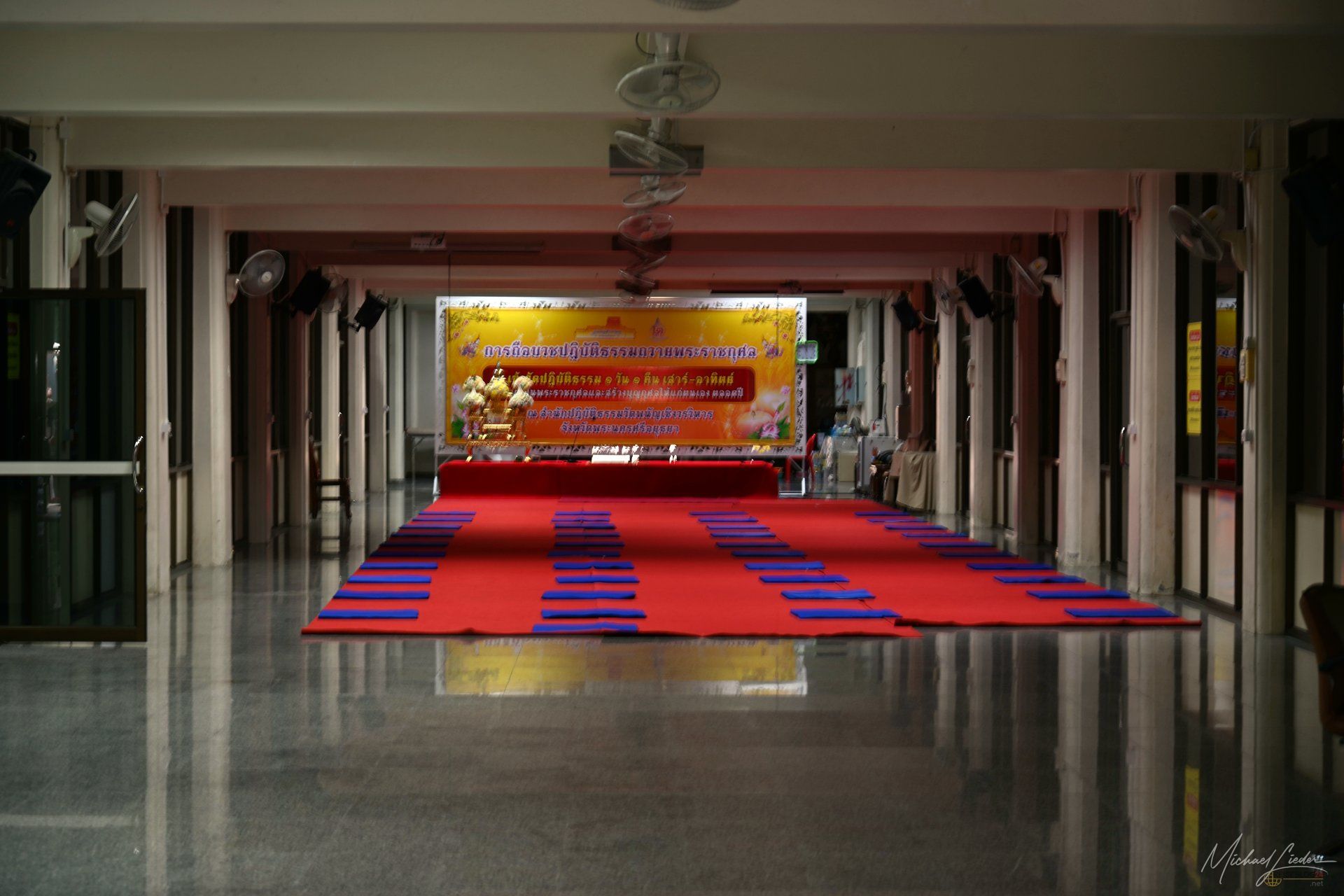
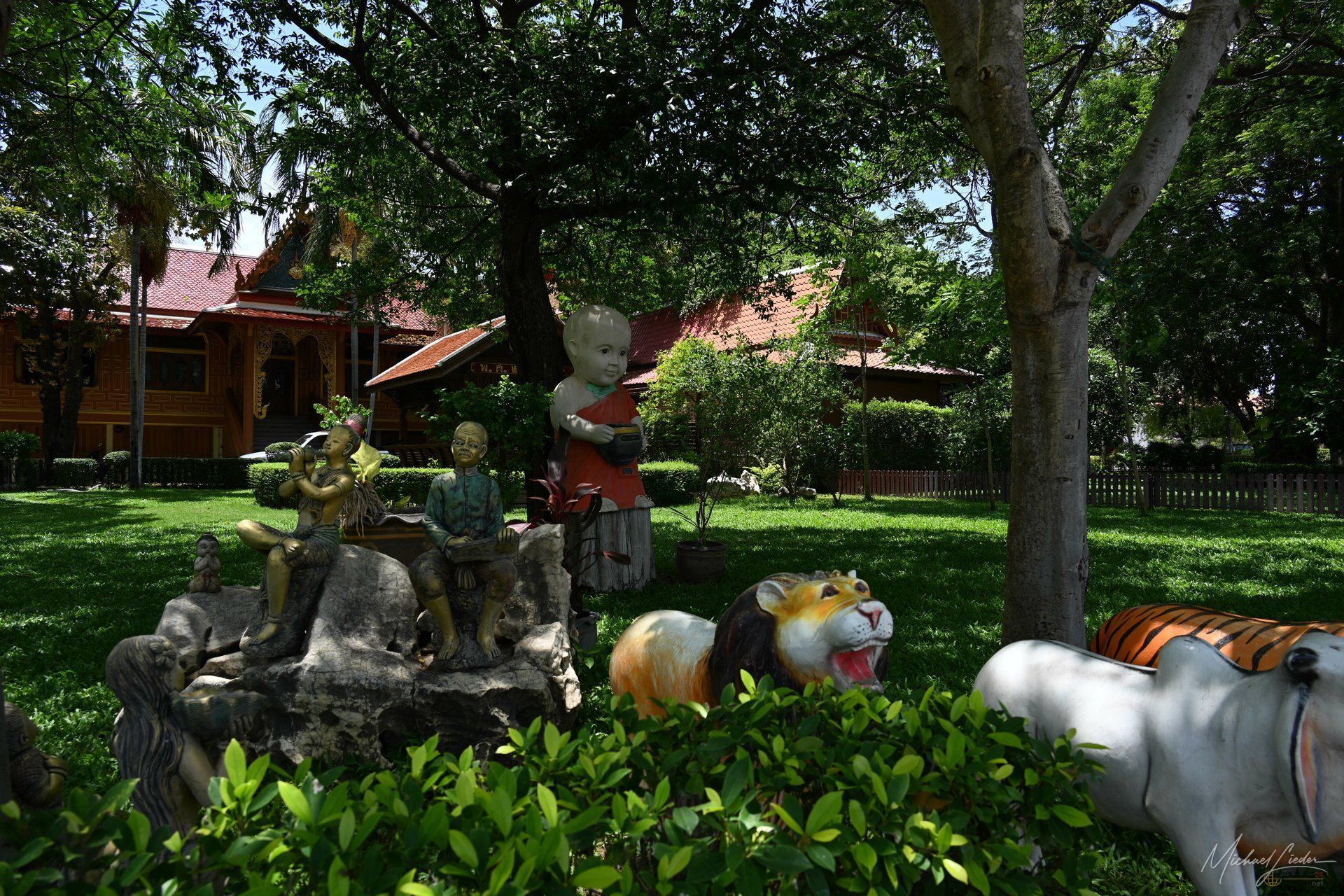
Wat Phanan Choeng
Sometimes temples simply stand there — beautiful, venerable, silent. And sometimes they stand there like Wat Phanan Choeng: massive, golden, radiant. As if to say, Look closely, human — this is history, spirituality, and a touch of grandeur all in one breath.
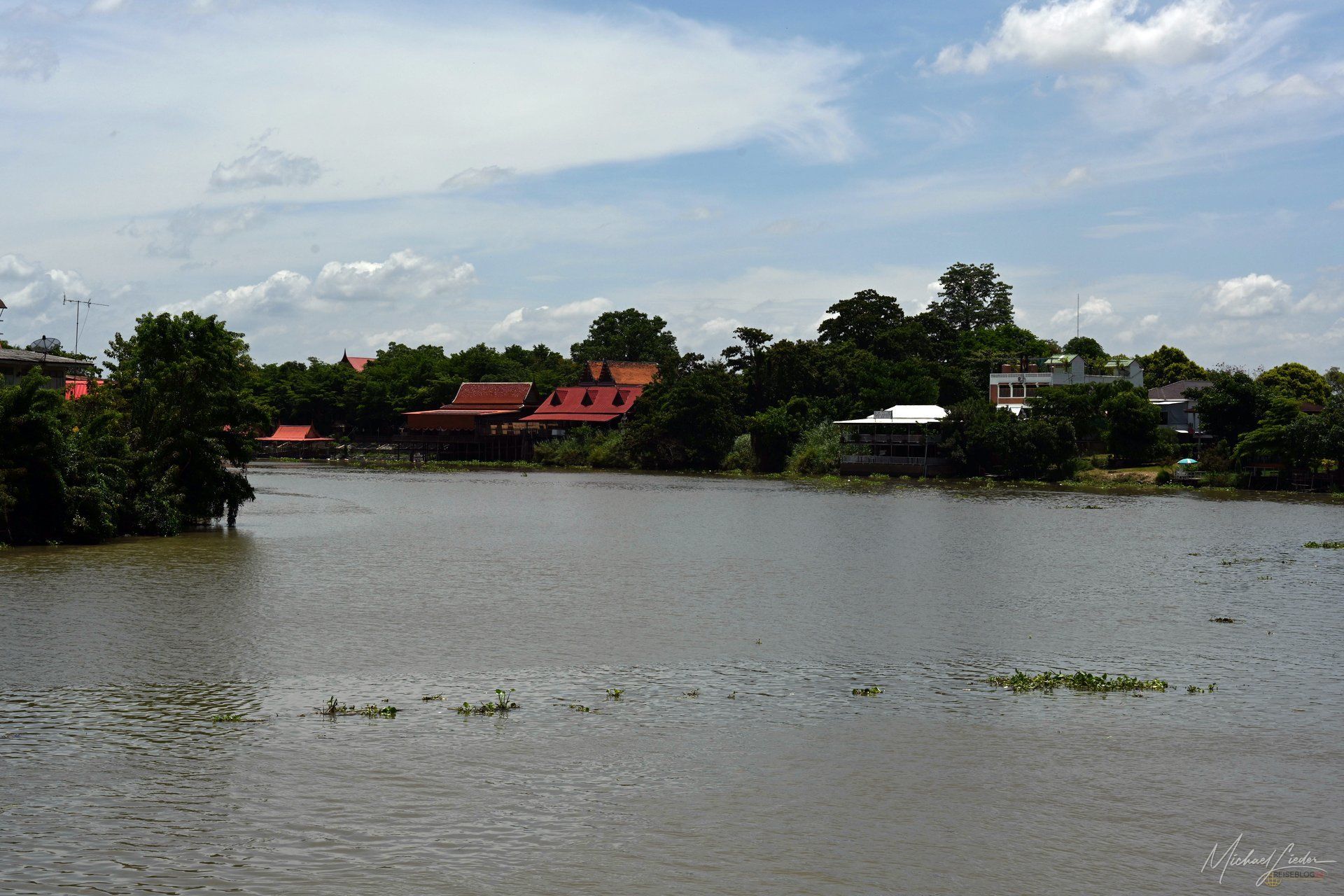
Rising on the banks of the Pa Sak River, just southeast of the old island city of Ayutthaya, this temple has stood its ground since the 14th century. And it is very much alive. No museum hush, no romanticized ruin-pathos — but a place where monks still pray, learn, teach… and occasionally smile when someone in flip-flops pauses in reverence, trying to look awestruck and quiet at the same time.
At its heart sits him: Phra Chao Phanan Choeng. A Buddha statue of monumental scale, built from brick and mortar, gilded almost to the heavens. Caught in that iconic gesture calling the earth itself to witness enlightenment. Built in 1324 — older than Ayutthaya itself — it has endured more storms, kings, and smartphone cameras than any chronicle could ever list. Today, it rests inside the grand viharn, flanked by Sariputta and Moggallana — essentially the Peter and Paul of Buddhism, just without the cathedral marketing.
All around, smaller Buddha niches shimmer, monks glide past in saffron robes, and outside the wind carries the scent of incense across the river. On the riverbank, a small Chinese shrine stands guard, complete with fiercely colorful warrior figures — very likely wearing the exact same stoic expressions they’ve had for centuries. Some things, thankfully, never change.
Whether you arrive by boat, scooter, or taxi: getting here is easy — the impact is anything but small. Wat Phanan Choeng isn’t a quiet monument; it’s a living breath of Ayutthaya itself — golden, mystical, slightly over the top. And precisely for that reason, it stays with you. Long after you’ve left. In your head. In your heart. And somewhere between reverence and a quiet smile.

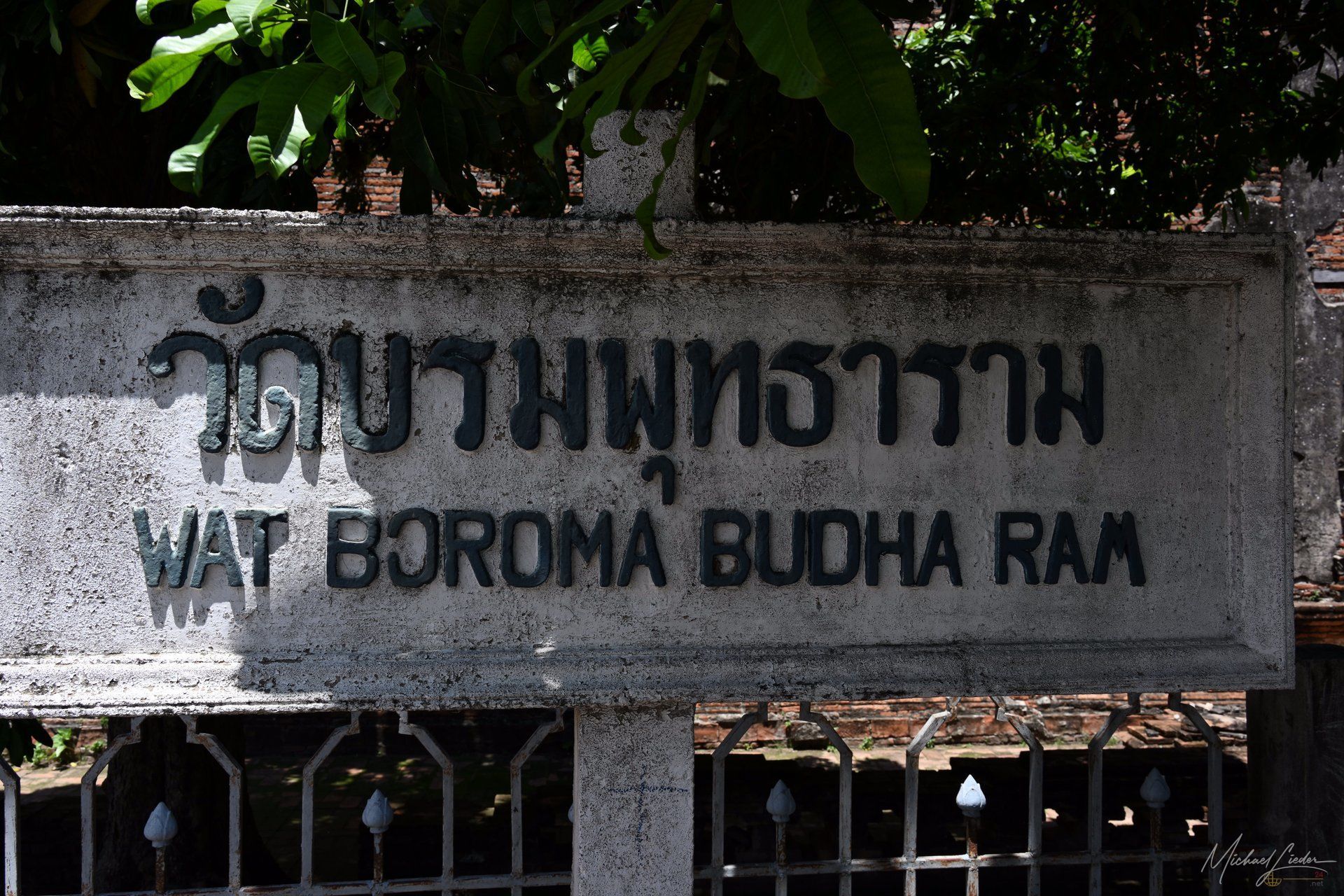
Wat Boroma Raan
Between bricks, silence and stories that no one tells anymore
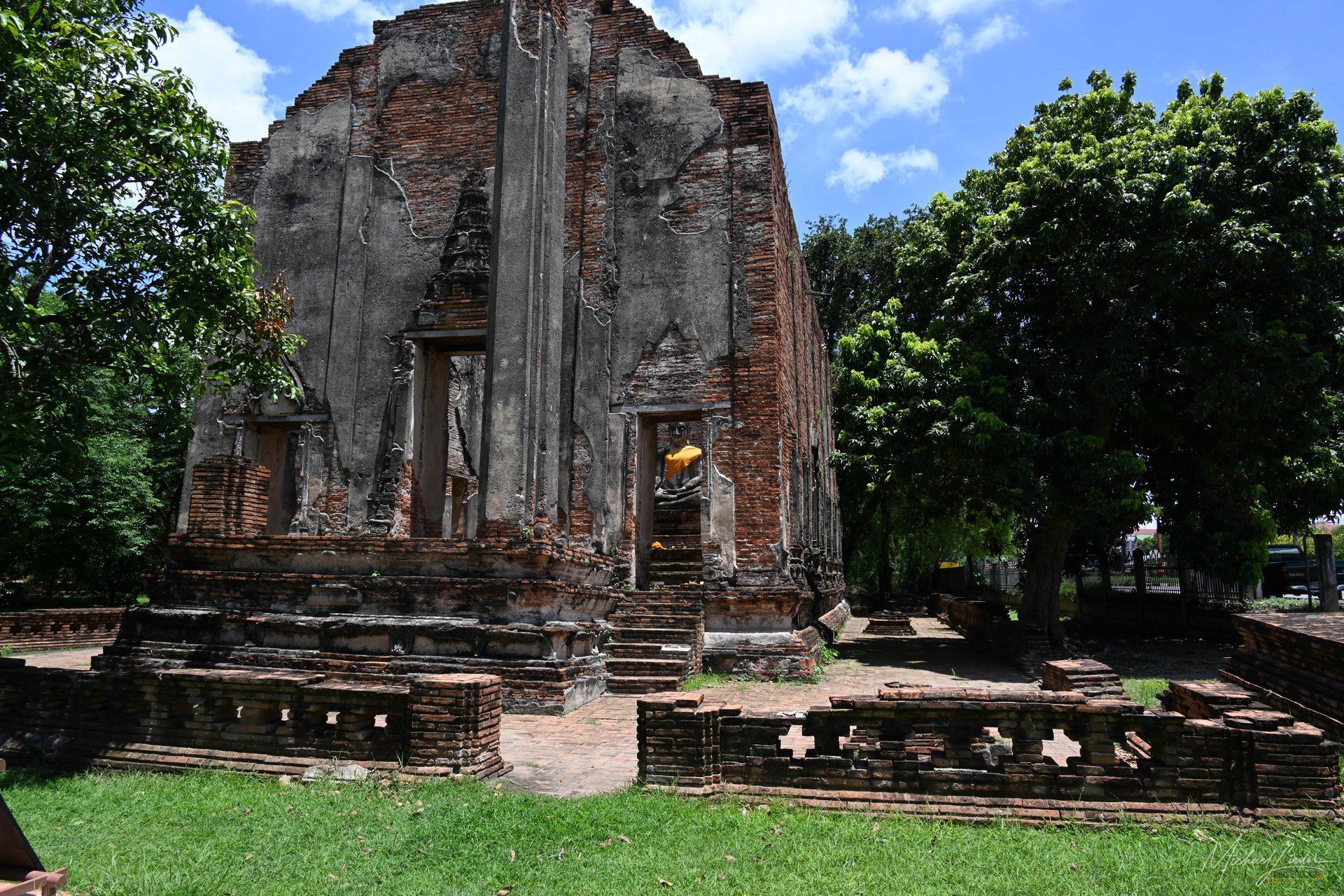
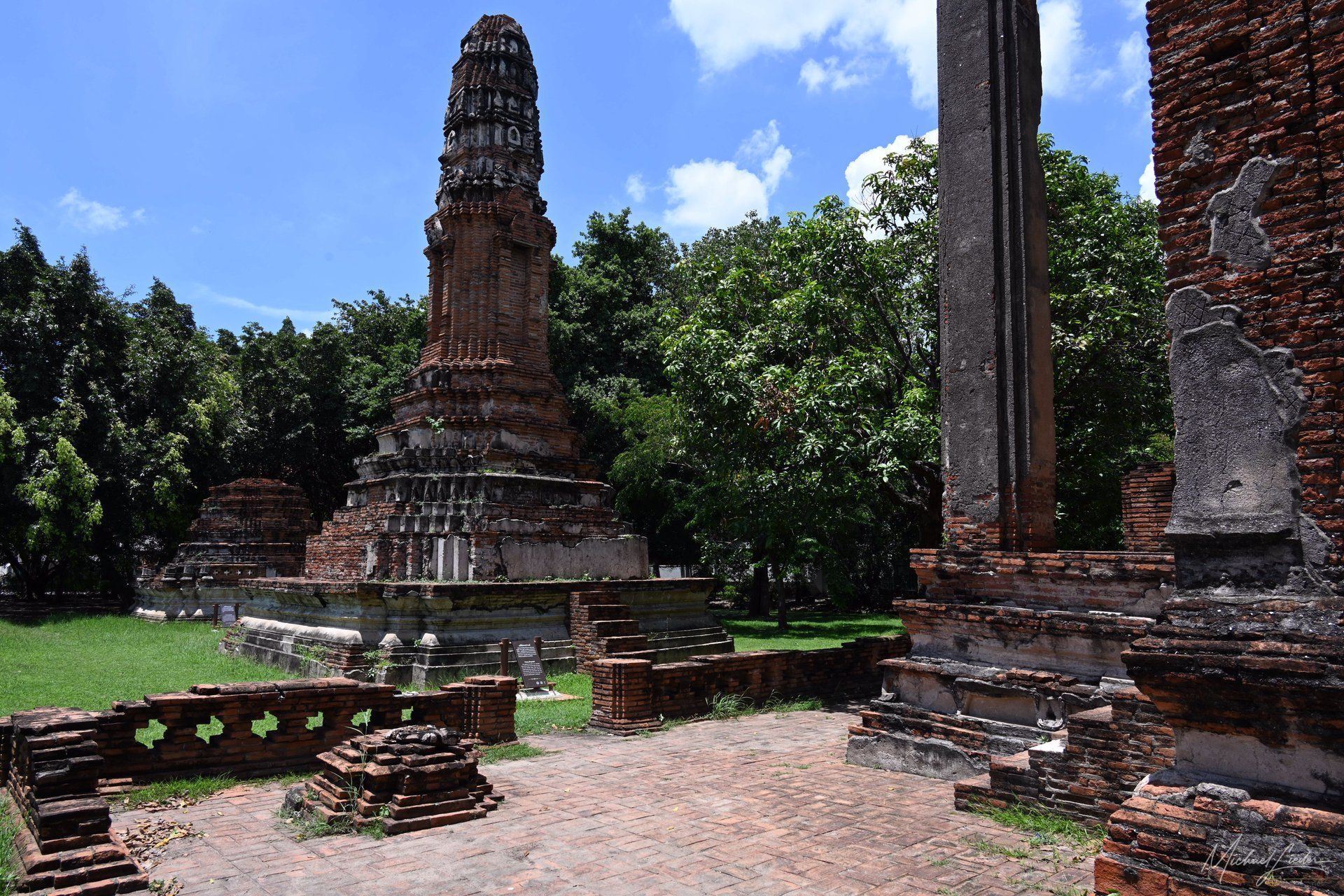
More often than not, it’s not the polished highlights that draw me in, but the quiet ruins everyone else seems to overlook. Wat Boroma Raan, on the edge of Ayutthaya, is exactly that kind of place. No sign points the way. No tour bus stops here. And maybe that’s its greatest fortune.
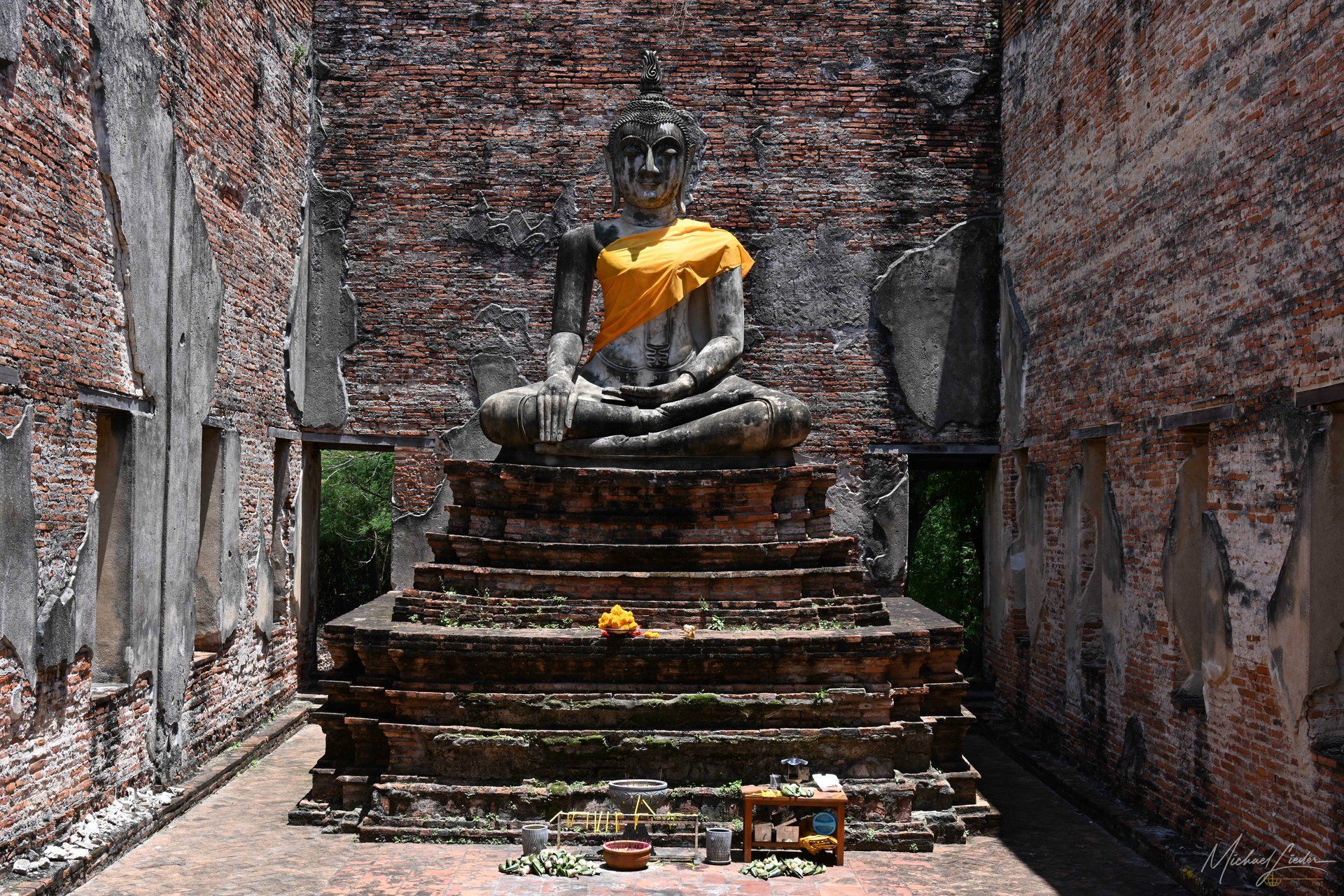
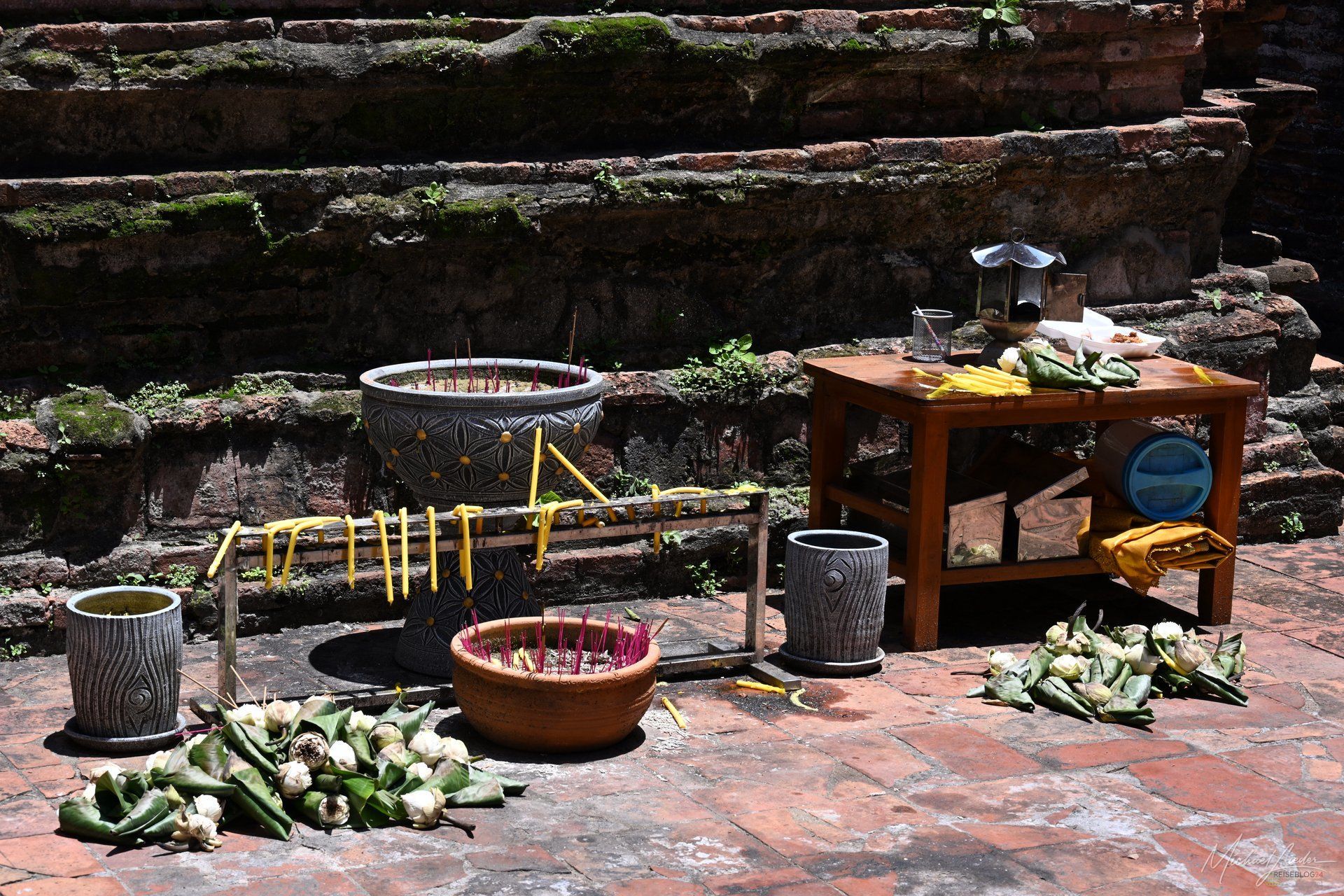
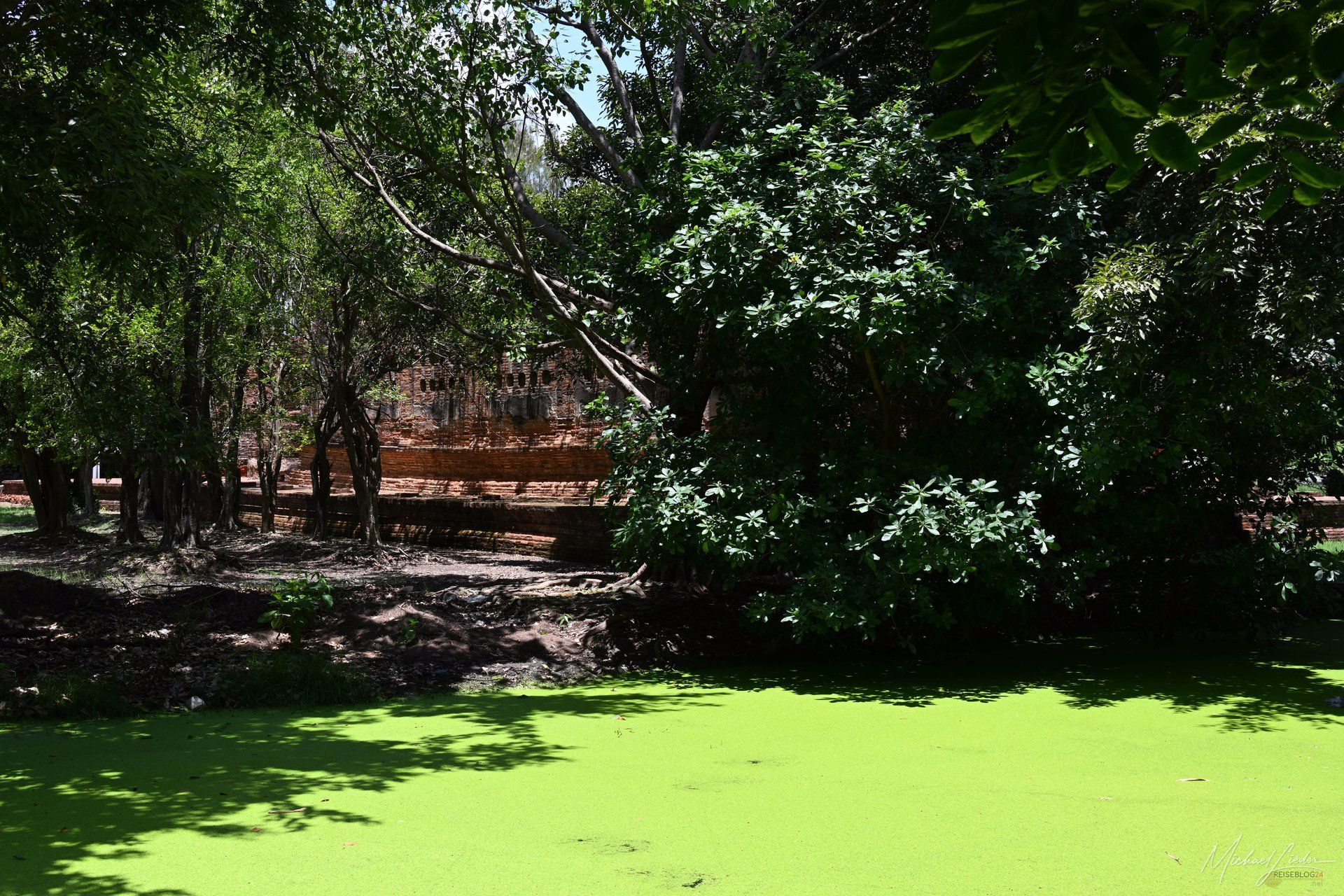
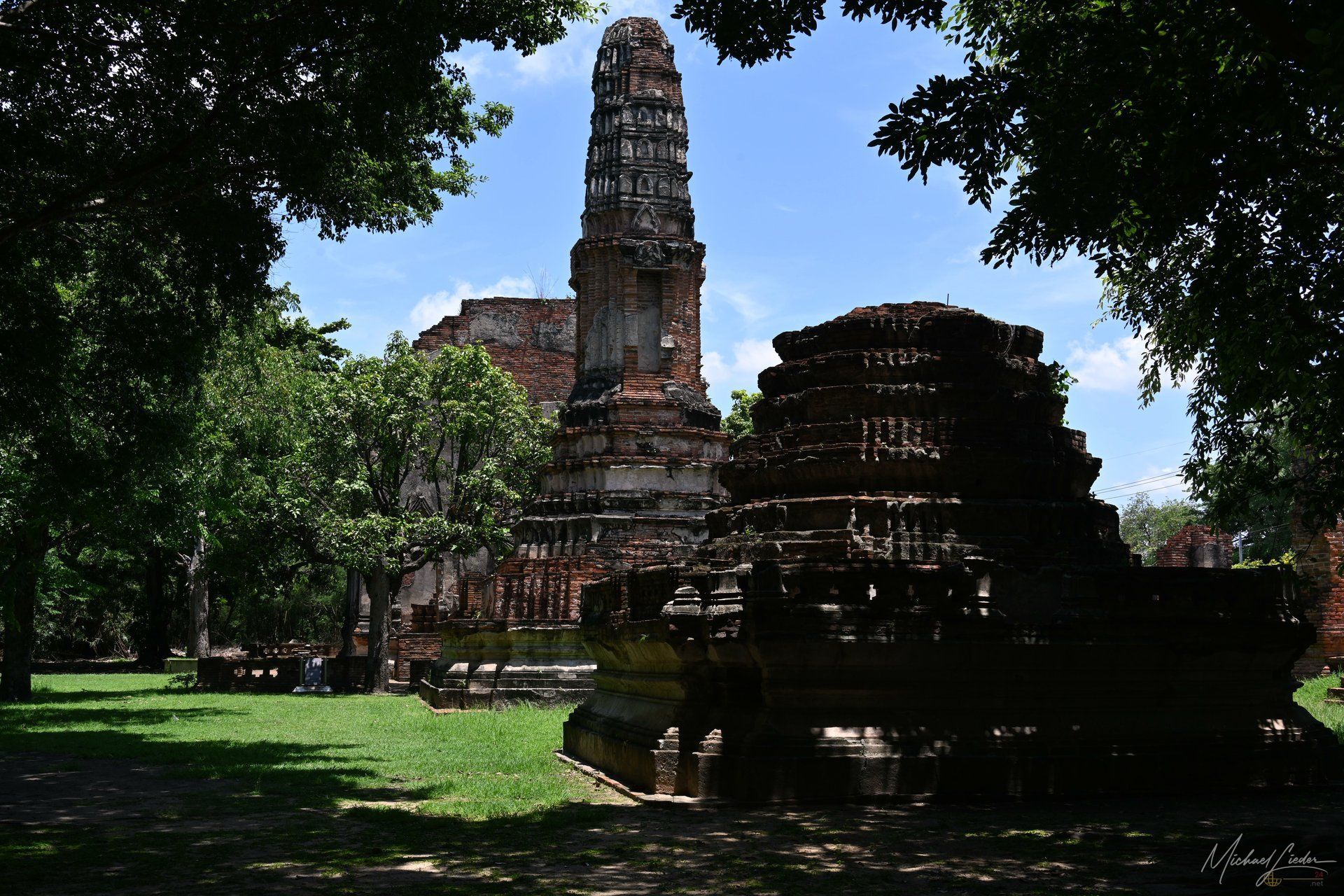
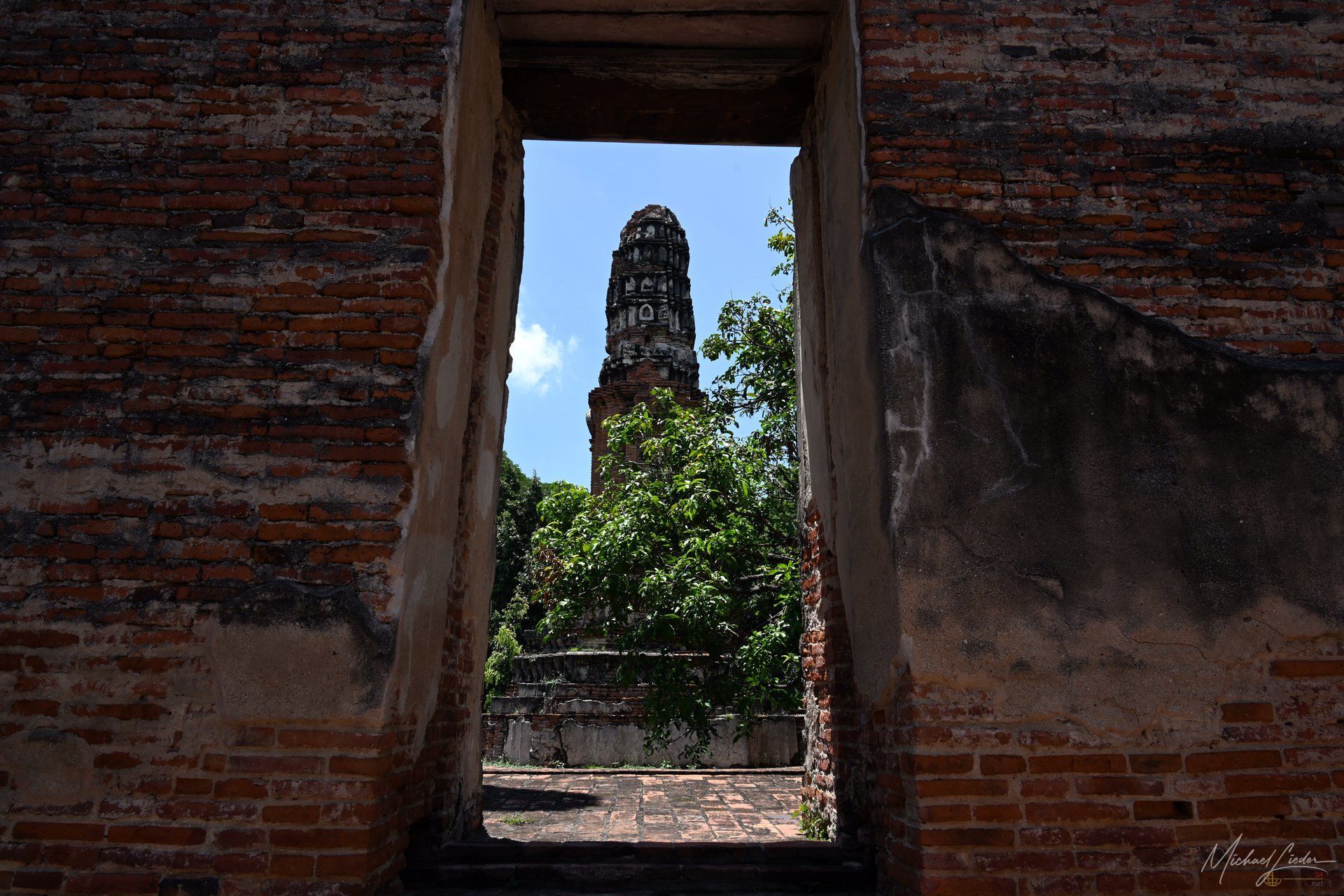
From afar, old bricks catch the warm afternoon light, as if whispering softly: We’re still here. I follow that silent call, cross a small stone arch bridge beneath which sluggish water drifts along — and suddenly I’m standing in the middle of centuries. Between walls long claimed by time sits a Buddha statue. Not perfect. Not golden. Not Instagram-ready. But honest. In front of it lie fresh offerings — incense sticks, flowers. Quiet proof that this place is still alive — just without any need for attention.
The architectural style carries clear Khmer influences: heavy, imposing, almost defiant. A touch of Angkor Wat in spirit — just without the crowds, without selfie sticks, without the constant clicking of unfamiliar cameras. There’s no entrance fee here. You pay with time instead. And in return, you’re given calm.
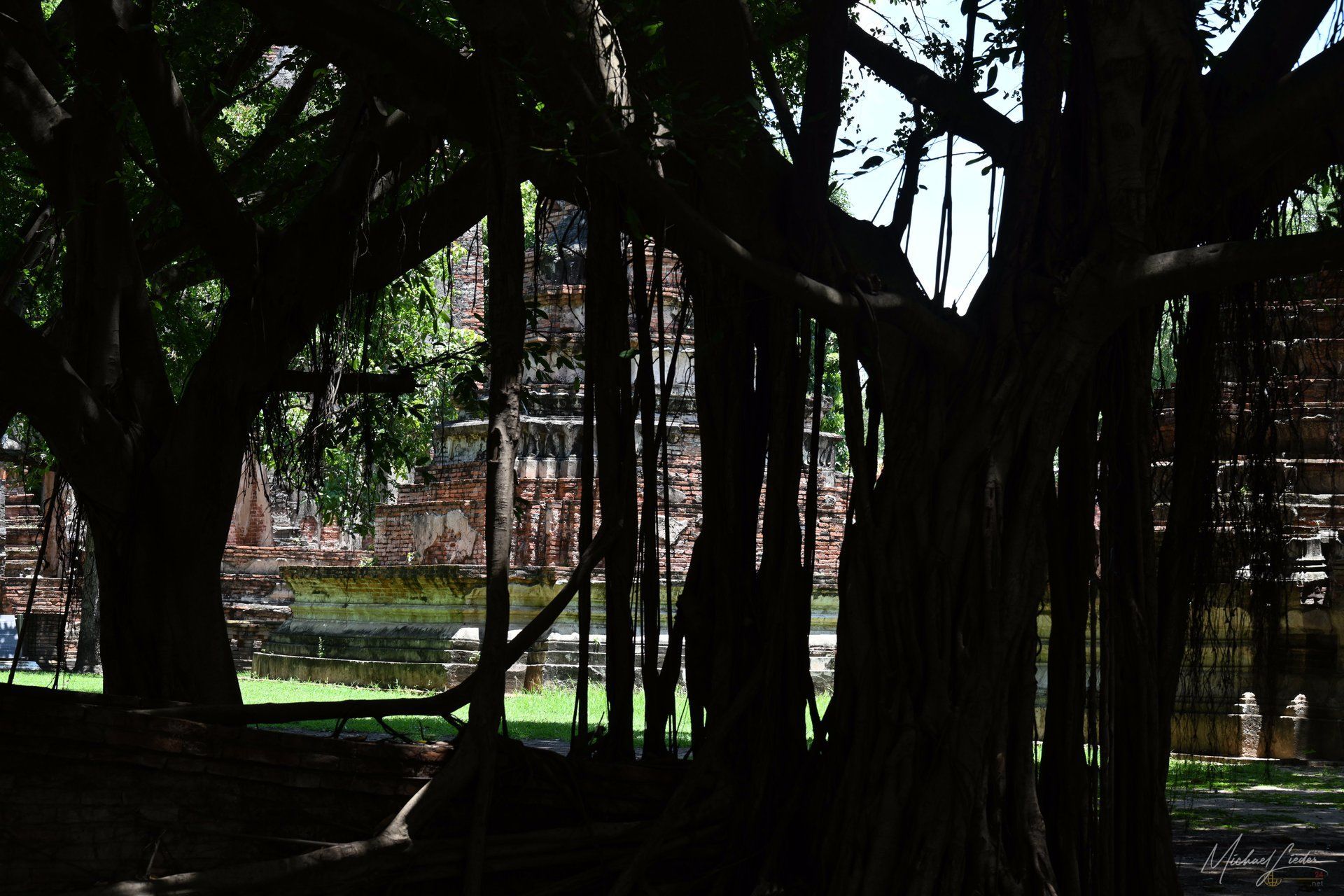
I sit beneath a mighty tree, listen to the wind moving through its crown, and think: This is what traveling feels like. No destination. No plan. No obligation. Just a moment that stays. Wat Boroma Raan is not a place for haste, but for quiet wonder. A forgotten chapter of Ayutthaya — and one of those you’re better off not finding in a guidebook. Some places want to be discovered. Others simply want to be left in peace.





Fascinating Facts About Ayutthaya – And Why It’s Far More Than a Day Trip from Bangkok
Ayutthaya Was the Capital of Siam for Over 400 Years
From 1351 to 1767, Ayutthaya was the political, economic, and cultural heart of the kingdom — longer than Bangkok has held that role so far.
One of the World’s Largest Cities in the 18th Century
At its peak, Ayutthaya was home to an estimated one million people. For European travelers of the time, it was as impressive and overwhelming as Paris or London.
The City Lies on an Island
Ayutthaya is surrounded by three rivers — the Chao Phraya, Lopburi, and Pa Sak. A natural defensive moat that encouraged trade and kept enemies at bay.
In theory. In practice, only until 1767.
Destroyed — But Never Gone
In 1767, Burmese forces reduced the city almost entirely to rubble. Temples were looted, Buddha statues beheaded. The ruins still tell that story today — quietly, but with haunting intensity.
UNESCO World Heritage Site Since 1991
The Ayutthaya Historical Park has been part of the UNESCO World Heritage list since 1991 — not because it is perfectly restored, but because of its authenticity and historical significance.
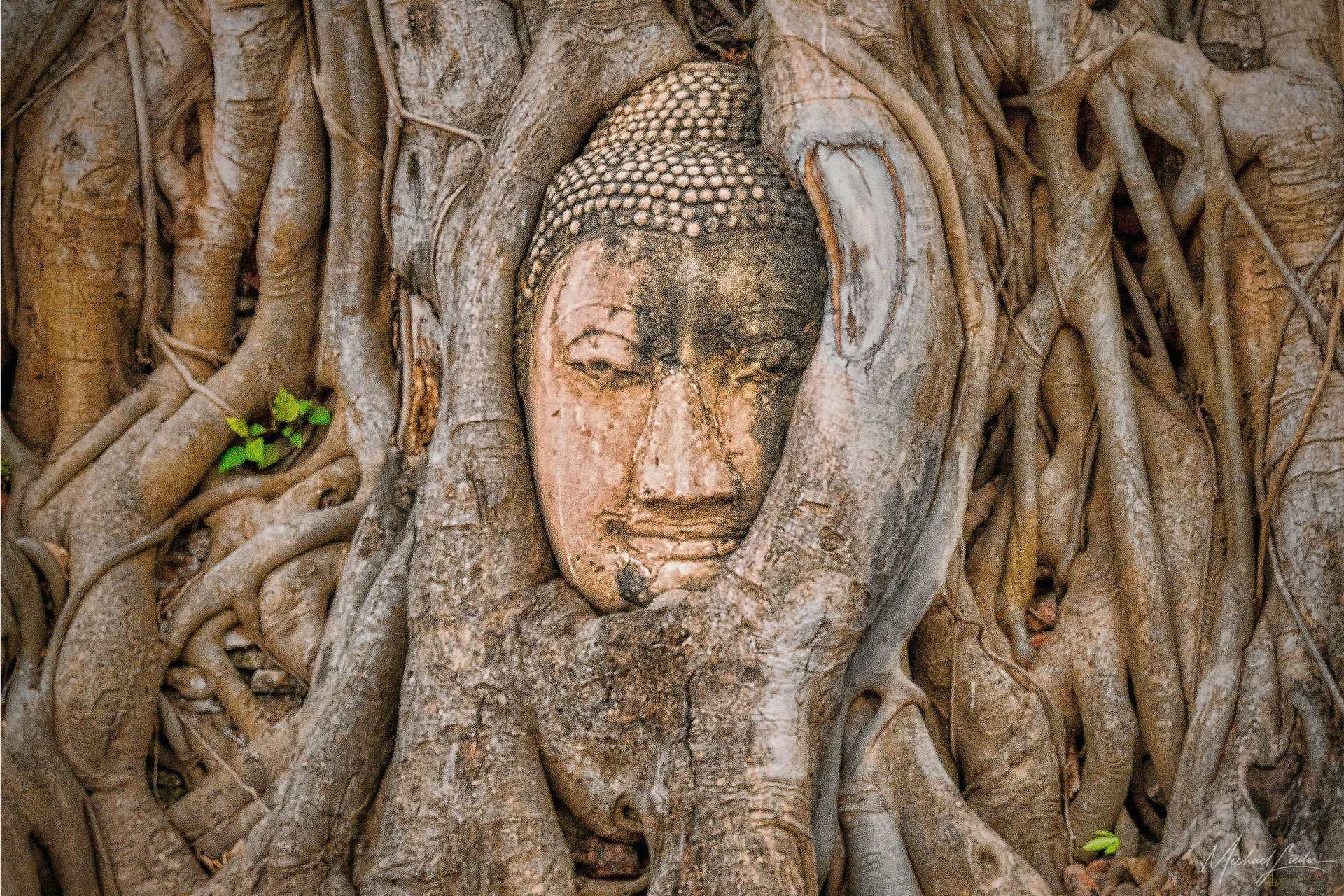
The World’s Most Famous Buddha Head in Tree Roots
At Wat Mahathat, a banyan tree has slowly wrapped its roots around the head of a Buddha statue. No one knows exactly how it ended up there — and that mystery is precisely what gives the place its magic.
Ayutthaya Was Radically International
Merchants and envoys from China, Japan, Persia, Portugal, France, and the Netherlands once lived here. Christian churches, mosques, and Buddhist monasteries coexisted side by side — centuries before multiculturalism became a buzzword.
Temples Were Centers of Power
Many wats were not only places of worship, but also schools, political meeting points, and symbols of royal authority.
Ayutthaya Thrives on Contrast Today
Scooters buzz past centuries-old ruins, school uniforms mix with monk robes, and the scent of street food drifts through layers of history. Past and present share the same space — effortlessly.
In Short
Ayutthaya is not a city you simply “tick off.”
It’s a place you feel — somewhere between greatness, loss, and quiet dignity.

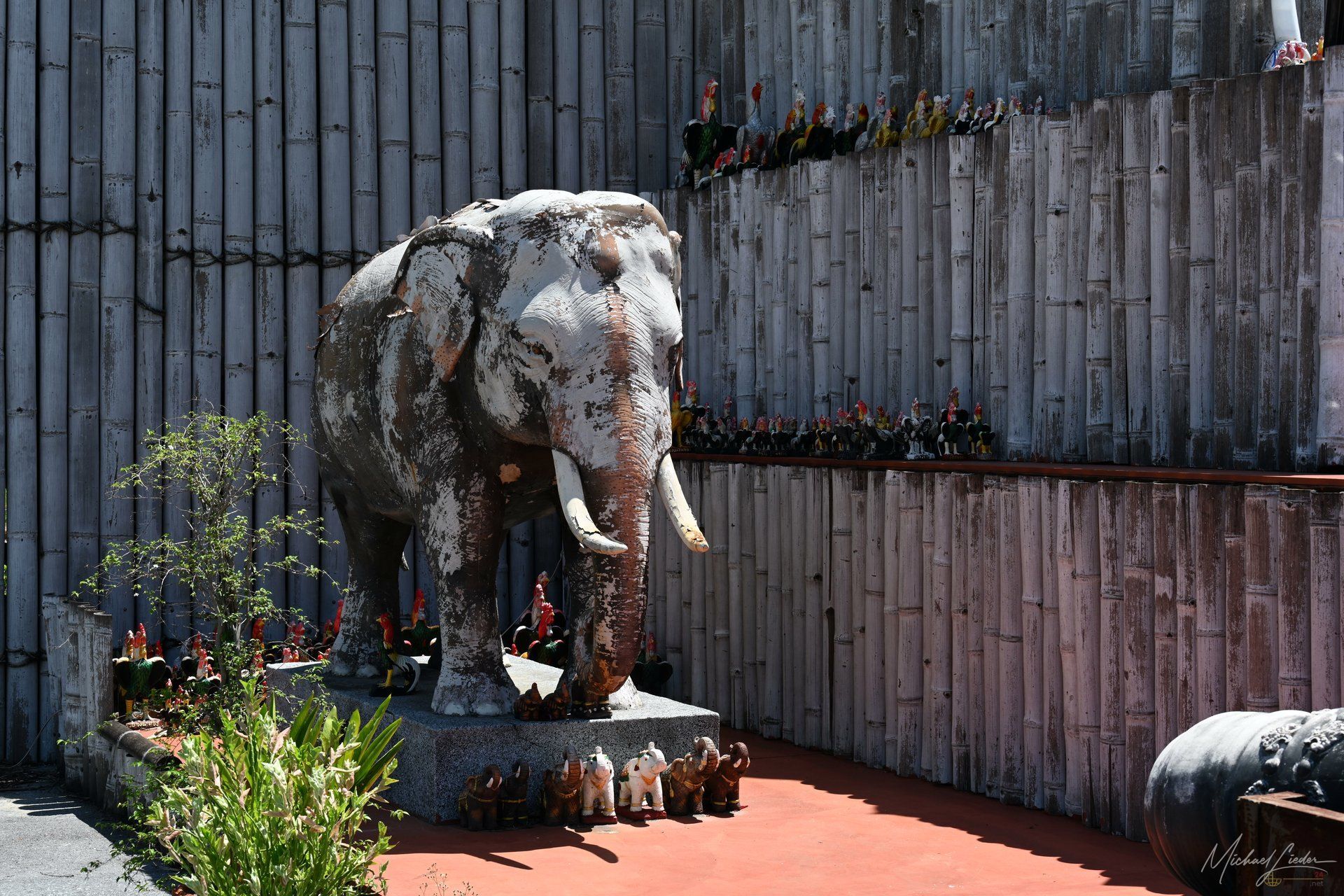


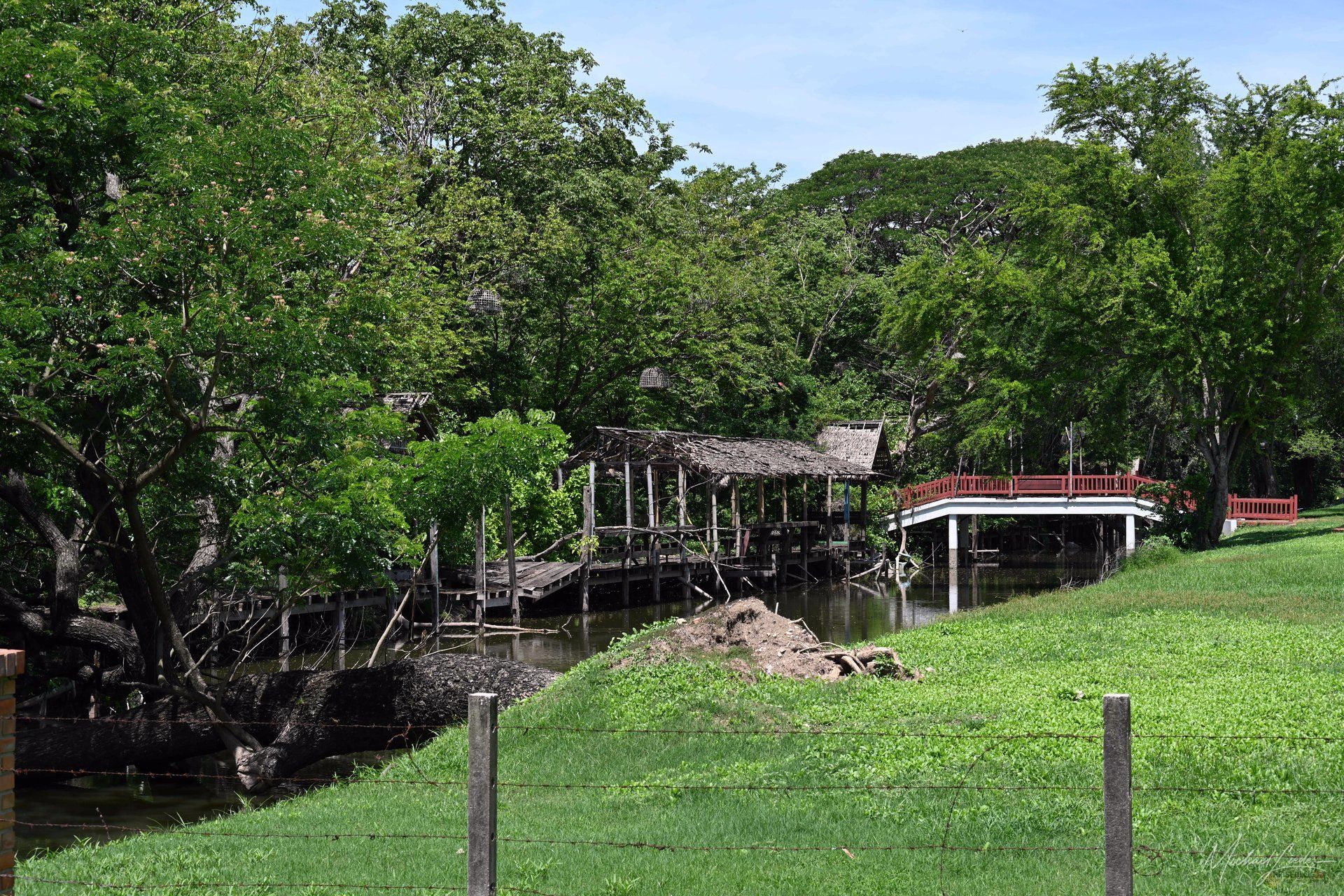
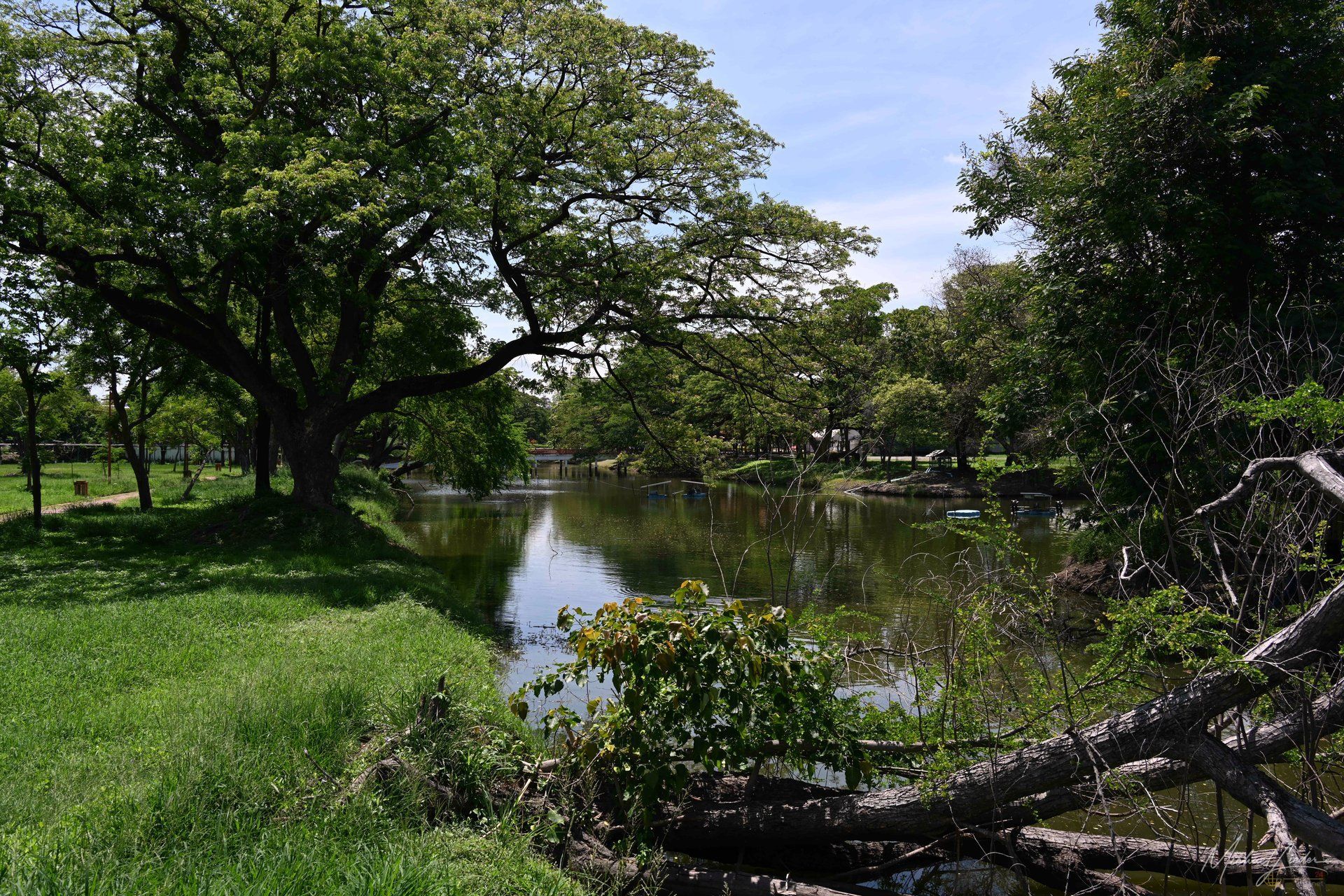
In search of the face of Buddha
Sometimes history feels so close you can almost sense it breathing down your neck. That’s exactly how it feels in Ayutthaya — the old royal capital that once formed the heart of Siam and now drifts somewhere between memory and decay. There, where the famous Buddha head rests in the roots of a banyan tree, time seems to have simply stopped. Countless travelers have photographed this face — calm, half-hidden, as if Buddha himself had chosen this spot as a refuge from everything outside that has grown too loud.
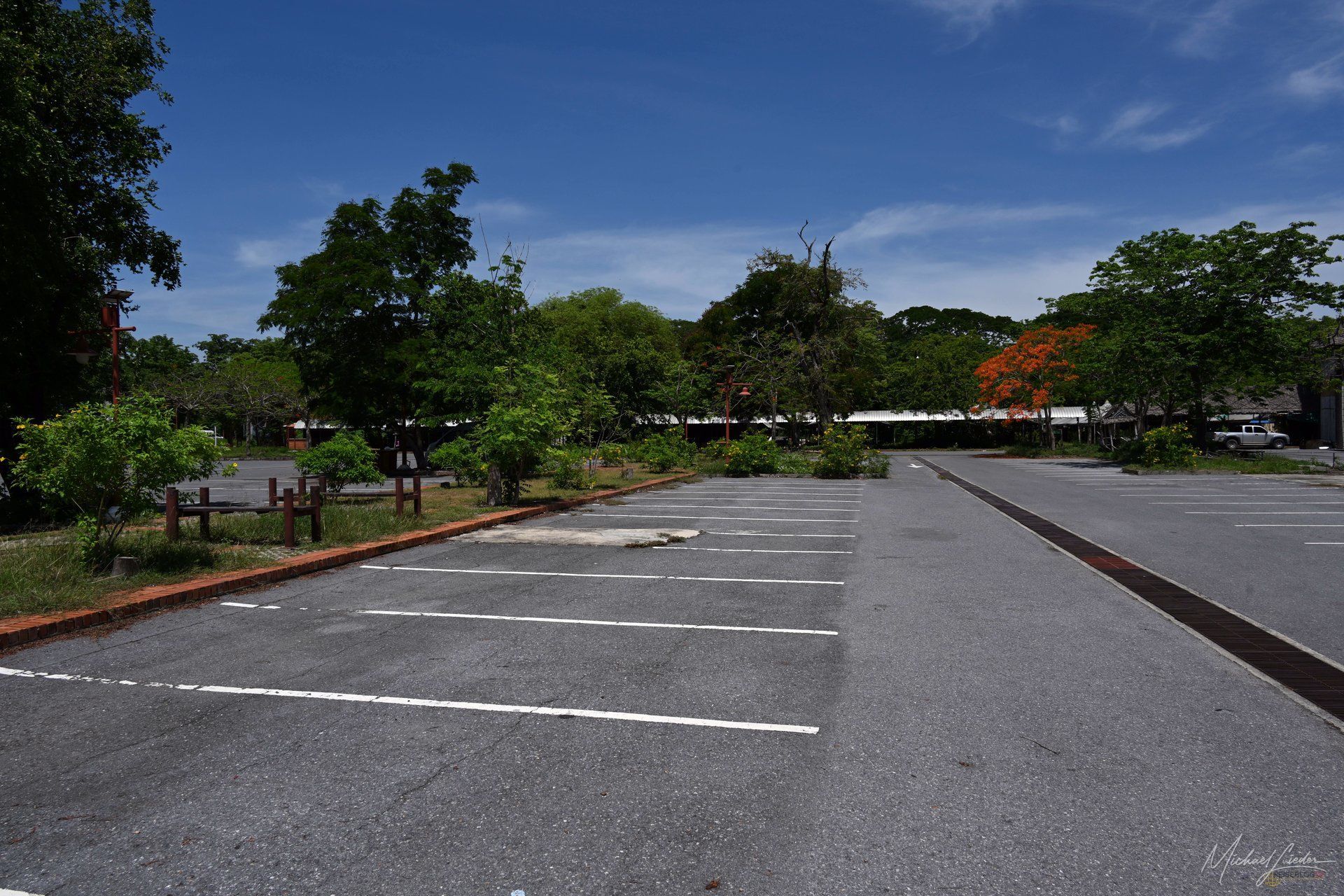
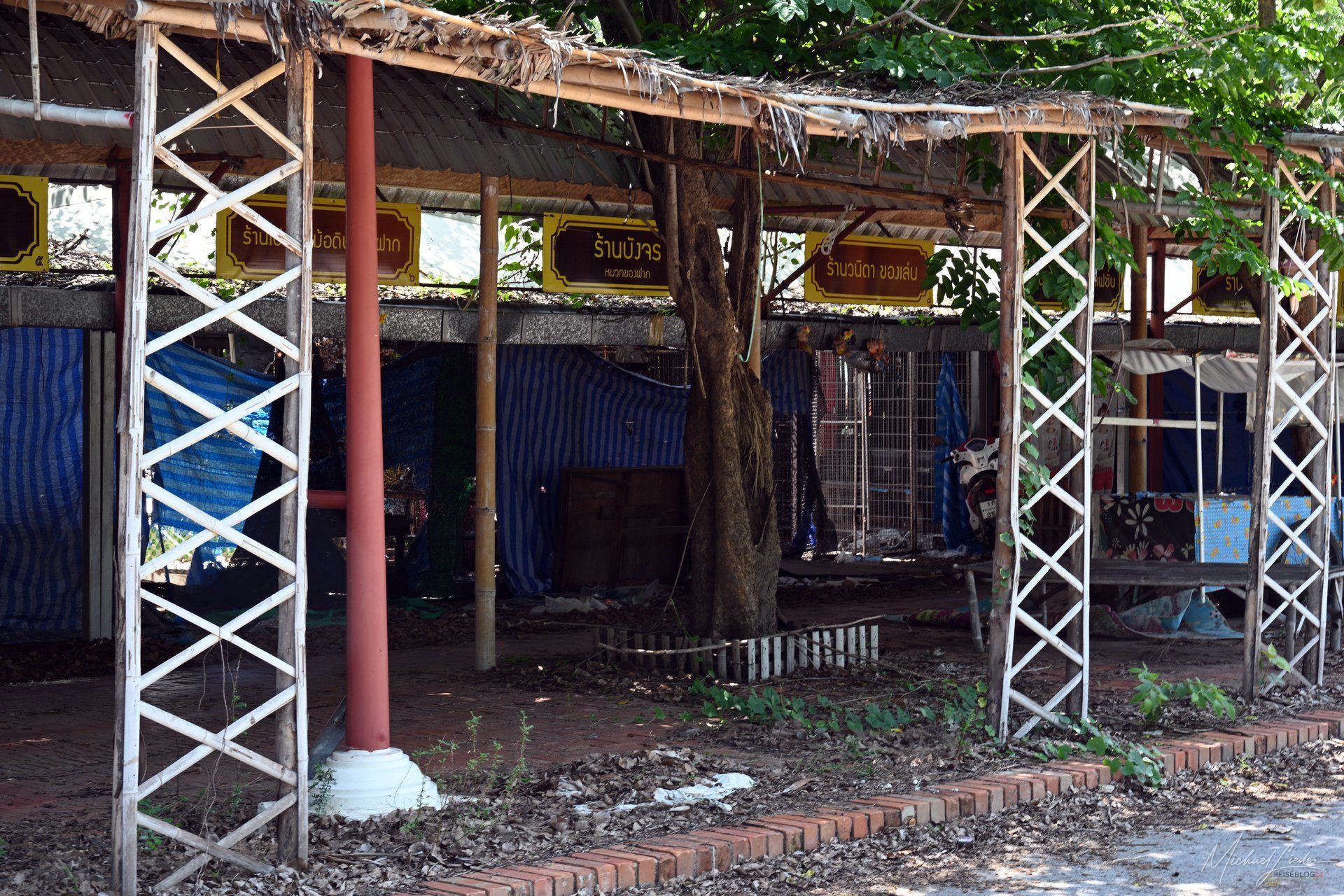
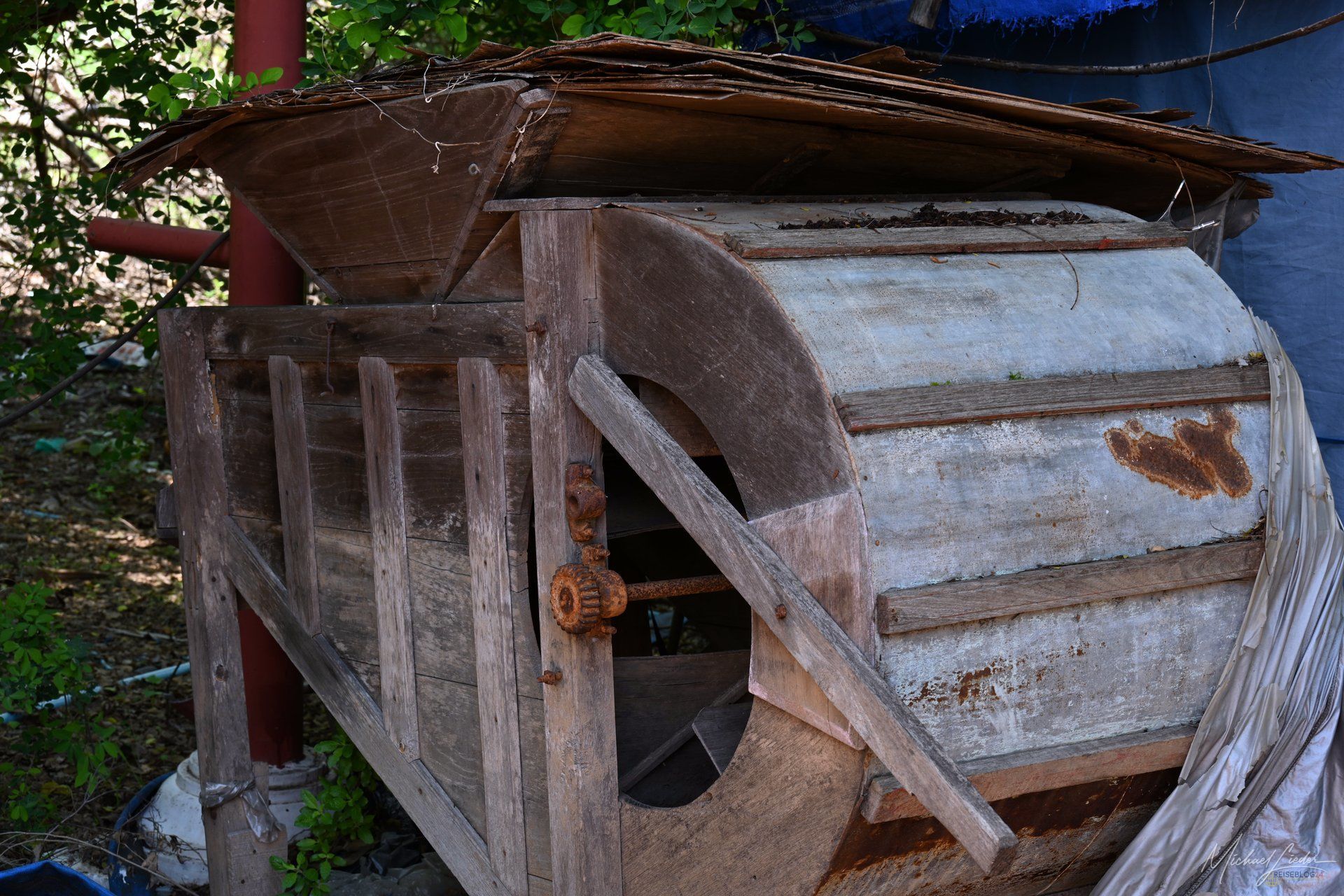
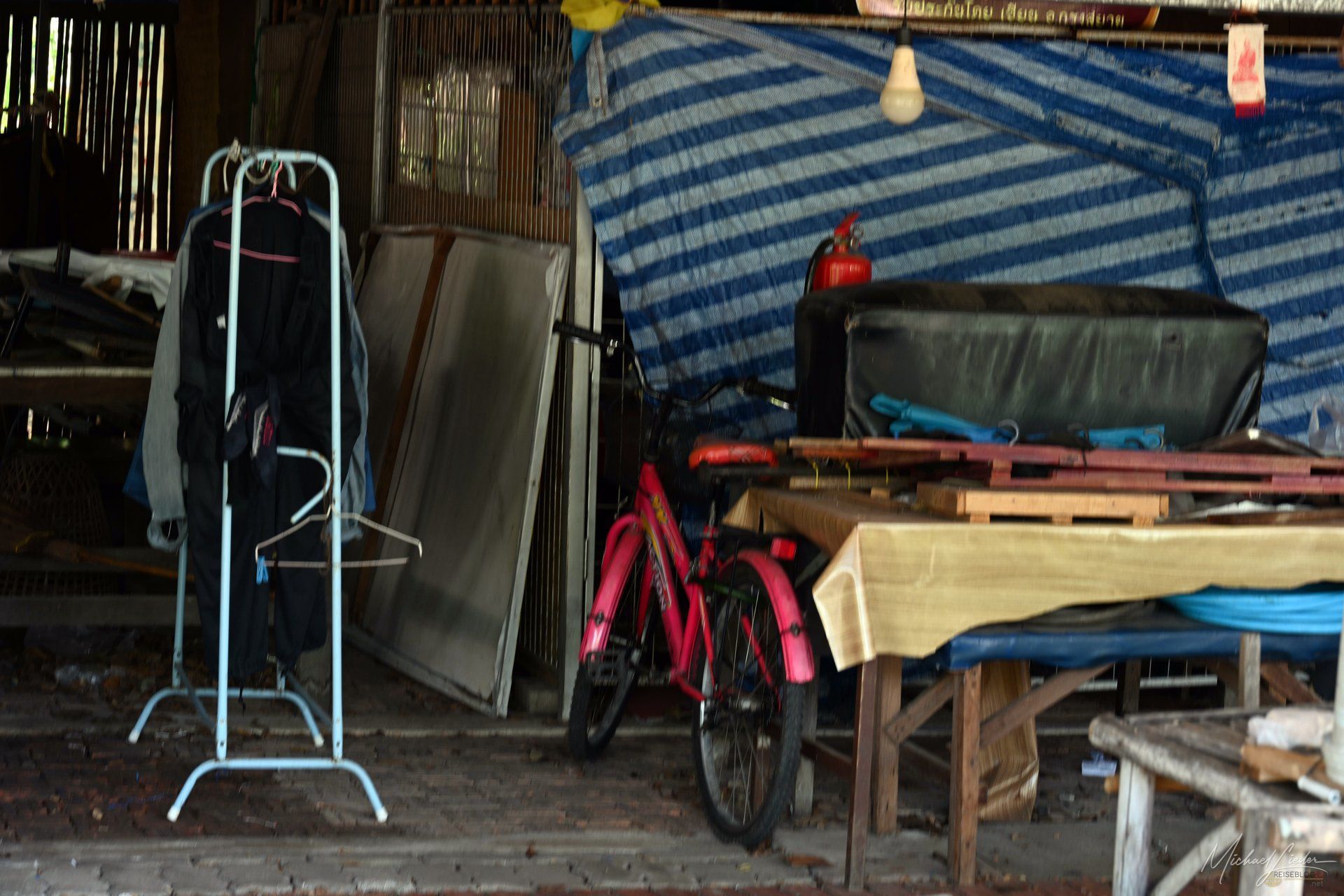
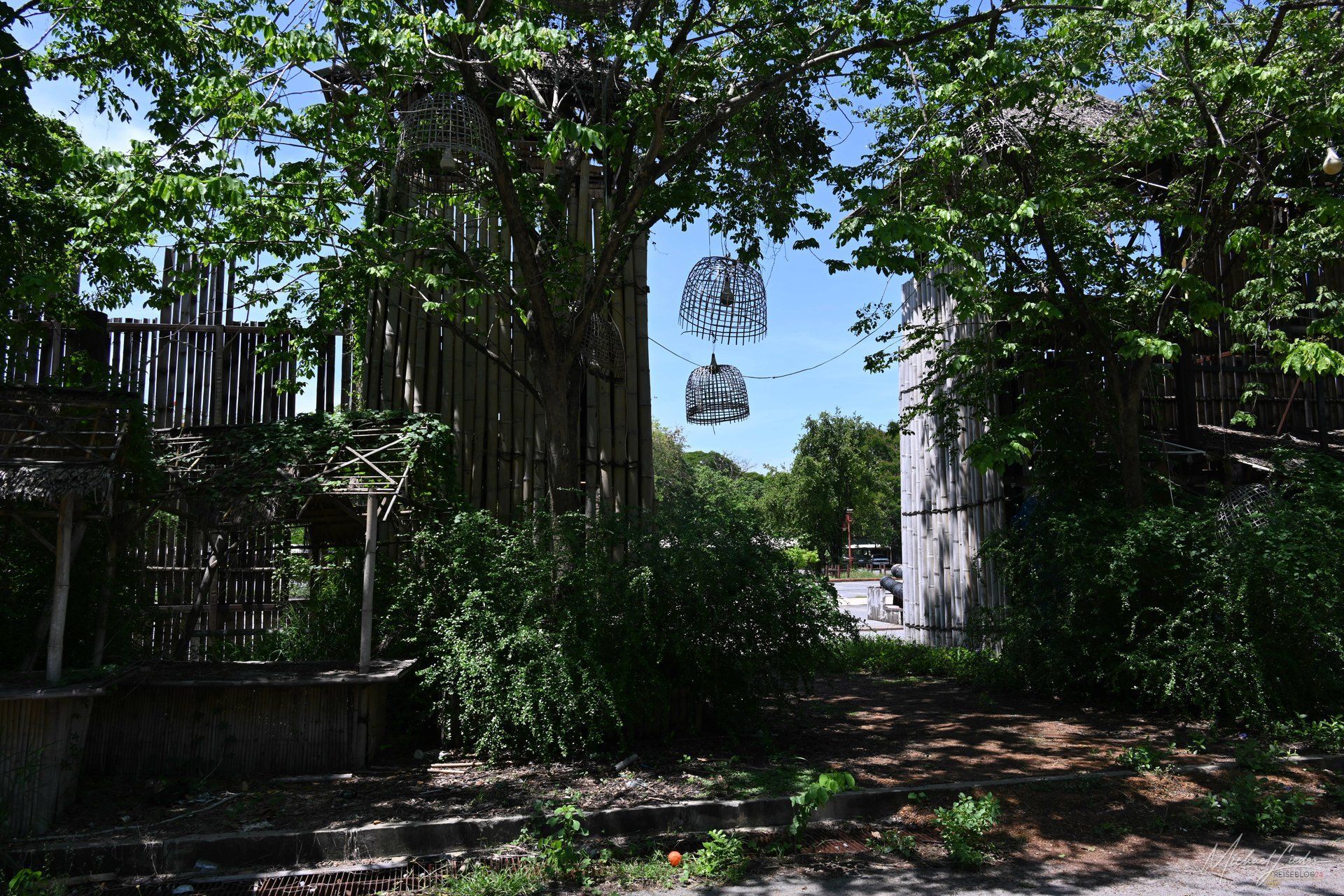
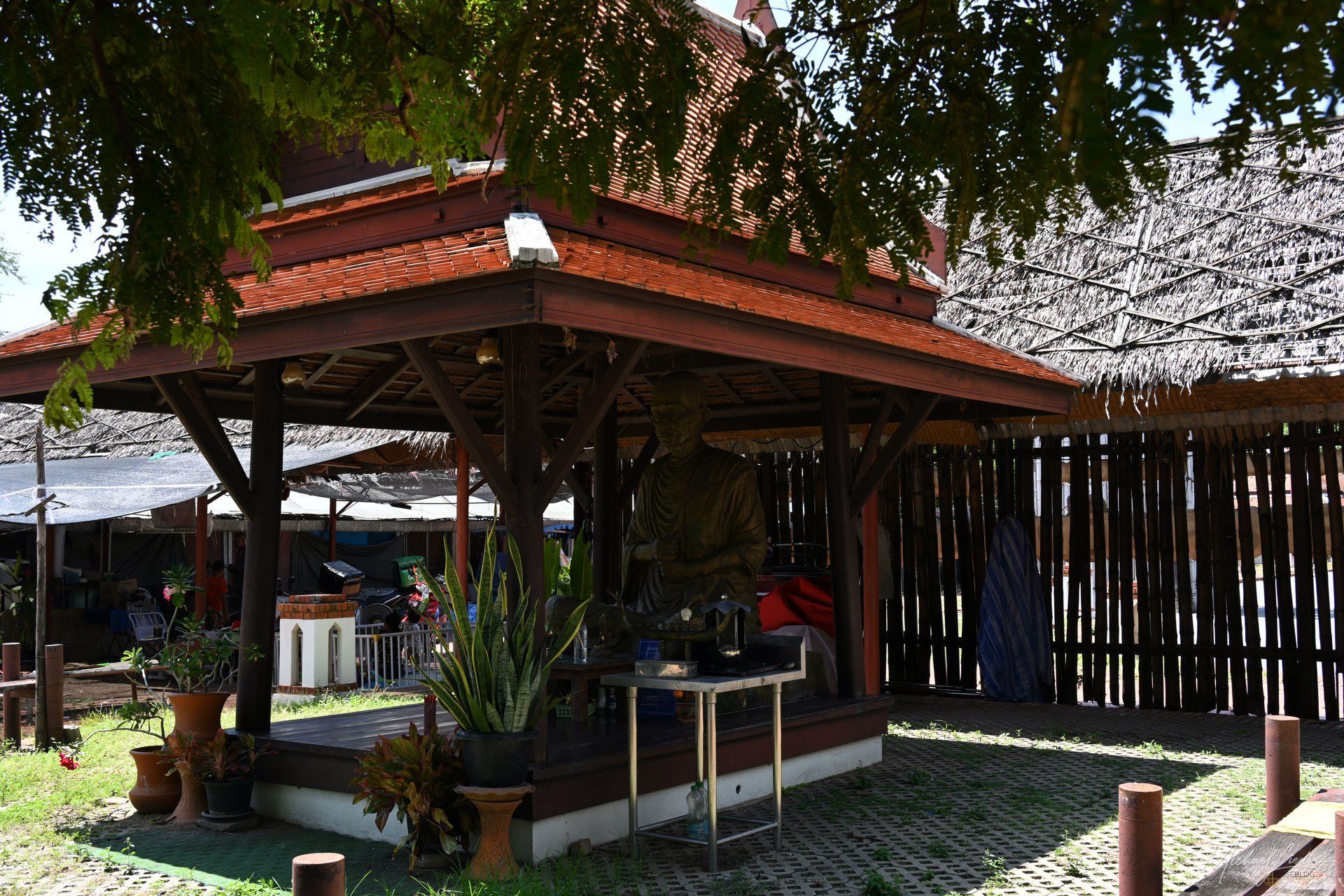
This place, Wat Mahathat, is world-famous. And yet today it feels strangely abandoned. While the tree roots cradle the Buddha head like protective hands, modern life seems to have loosened its grip on the city. Along the edges of the temple grounds hangs a quiet melancholy — a subtle reminder that the world did not wake up everywhere at the same time after the pandemic. Where tour groups once swayed through the heat beneath brightly colored umbrellas, stray dogs now nap lazily in the shade of the ruins. The old wats, once vibrant with life, suddenly resemble film sets whose director quietly walked away.
I wander through walls that have witnessed more history than some entire countries. I wonder how many prayers were whispered here, how many hopes faded between these stones. At an almost deserted souvenir stall, a woman sells dried lotus flowers. She smiles — calm, gentle, aware that today no one else will likely come. And that smile moves me more than any statue ever could. Between dust, sunlight, and the quiet hope that things might someday get better again.
Perhaps this is Ayutthaya’s true message: not everything that is old needs applause. Some places don’t need crowds, likes, or selfies. They only need time. And silence. And someone who is willing to stop — and truly look.
